Why Do Gutters Overflow?
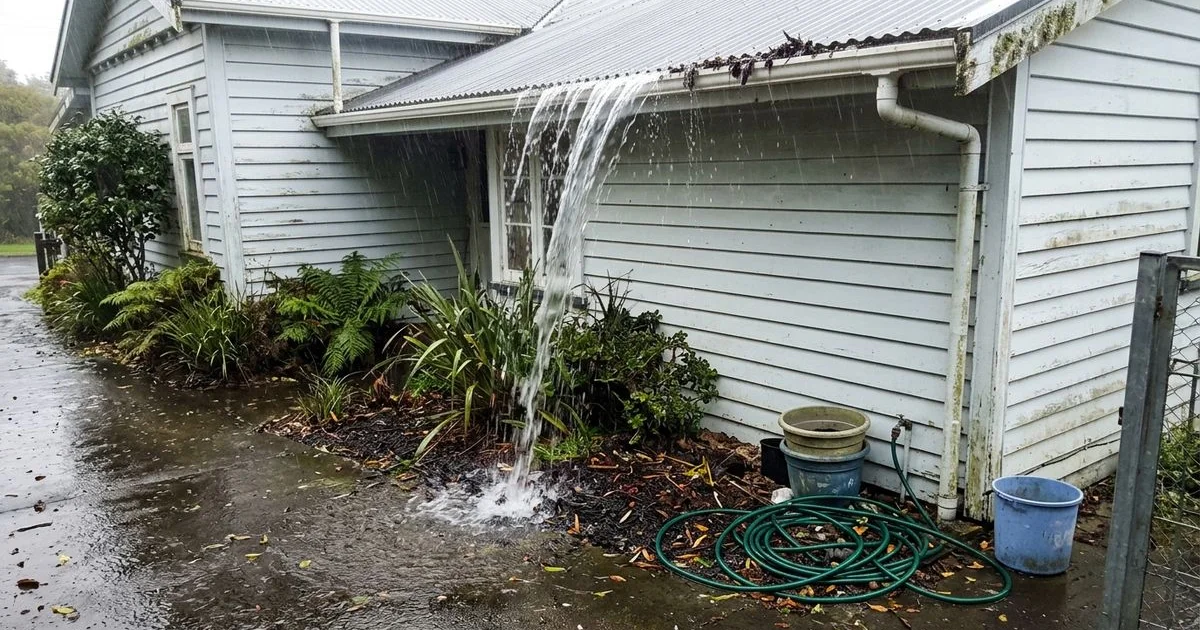
Gutters overflow when water arrives faster than it can drain away. Most of the time, something is in the way: leaves, needles, silt or moss sitting in the spouting or jammed in the downpipe.
If you’re asking “why are my gutters overflowing?”, a blockage is the usual answer. Sometimes the overflowing spouting has the wrong slope, or it’s too small for a big roof in a heavy downpour.
Rotorua puts spouting to the test. Figure.NZ’s chart of 1991 to 2020 averages shows about 1,356 mm of rain a year here, and Land Use NZ’s climate summary puts the Mamaku plateau closer to 2,400 mm.
In most cases a thorough vacuum gutter clearing with a full downpipe flush fixes it. In others, the spouting needs a repair. Below, we cover the common causes, the checks you can do from the ground, and how to choose between a clear and a repair.
Overflow isn’t just messy. Water that spills over the spouting can run down the cladding, soak into the fascia board, stain soffits and pool around your foundations. In bad cases it finds its way into ceilings and wall cavities.
Key point
A gutter that looks clear from the lawn can still overflow. The blockage is often lower down, in the dropper outlet, the downpipe or the soak hole.
What Are the Most Common Causes?
Five things cause most overflow: debris, a blocked outlet, a blocked downpipe or soak hole, poor fall, and spouting that’s too small. Here’s how each one shows up.
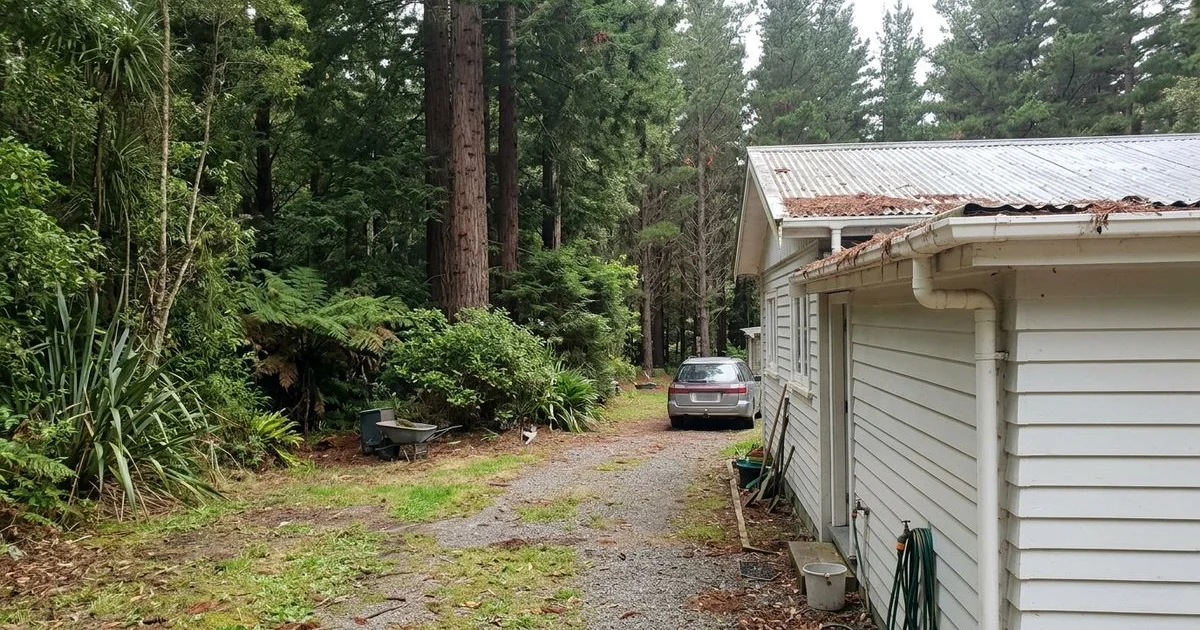
- Debris build-up. Leaves, pine needles and twigs collect in the spouting and pack down. They hold water, slow the flow and eventually block it completely. Around Rotorua, pine and redwood needles are especially good at forming a dense mat, which is why gutters on tree-lined sections block so quickly. Pestrol NZ names autumn as the highest-risk season for blocked gutters, and Shingle Roofers NZ suggests a clean twice a year if pine trees are nearby.
- A blocked dropper outlet. The outlet is where the spouting meets the downpipe. It’s the narrowest point in the system and the first place debris jams. Once it’s blocked, water backs up along the whole run.
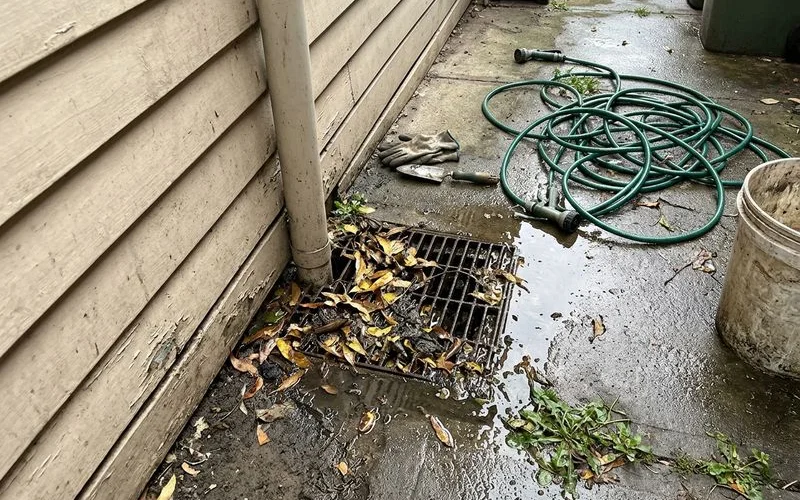
- Blocked downpipes and soak holes. Silt and fine debris wash past the outlet and settle in bends and in the soak hole below. You might notice a downpipe that gurgles, drains slowly or doesn’t run at all in heavy rain.
- Incorrect fall. Spouting needs a slight slope toward the outlets. The NZ Metal Roofing Manufacturers Code of Practice sets a minimum fall of 1:500 (2 mm per metre) and recommends 1:200 (5 mm per metre) for better drainage and self-cleaning. If a run sags or was installed too flat, water sits in low spots and spills over there first.
- Undersized spouting. Heavy Bay of Plenty downpours can deliver a lot of water in a short time. A large roof feeding a small spouting profile, or too few downpipes, can overflow even when everything is clean. Designers working to the Code of Practice size spouting using rainfall intensity for a 50-year return period, so gutters overflow in heavy rain when they were sized for a smaller roof or a milder storm.
Use this table to match what you’re seeing to the likely cause.
| What you see | Likely cause | Usual fix |
|---|---|---|
| Overflow along the whole run | Debris build-up or blocked outlet | Vacuum clear and downpipe flush |
| Overflow at one low spot | Sagging or wrong fall | Re-hang the run, replace brackets |
| Downpipe silent in heavy rain | Blocked downpipe or soak hole | Flush through to the soak hole |
| Overflow only in big storms | Undersized spouting or too few downpipes | Assess capacity at a quote |
| Dripping at joins, not over the edge | Leaking joints, not overflow | Reseal joints and outlets |
Safe Checks You Can Do From the Ground
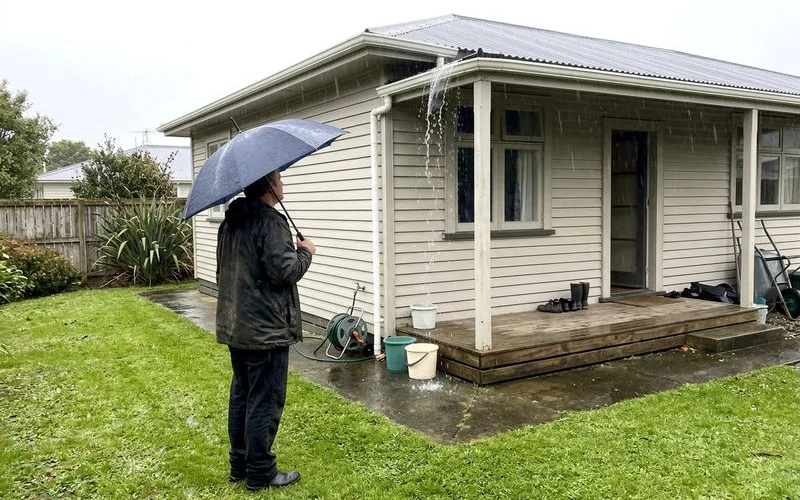
You don’t need a ladder to learn a lot. Next time it rains, step outside with an umbrella and look at:
- Where the water spills. All along the edge, or at one spot?
- The downpipes. Are they running? Is water bubbling out of the soak hole or pooling at the base?
- Plants in the spouting. Grass or seedlings growing out of the gutter mean there’s a thick layer of soil and debris.
- The fascia and soffits. Staining or peeling paint below the spouting points to water that’s been escaping for a while.
Own a two-storey house or manage a multi-level building? Stand back far enough to see the whole eave line. Snap a phone photo while water is spilling, and send it to us or your property manager so the exact spot is clear.
Dripping at joins is different. If you see water leaking from spouting at the joins rather than going over the edge, that’s a leak, not overflow. Our guide on leaking gutters covers how to tell them apart.
Please don’t climb up to check. NZ Herald reported ACC figures showing 9,421 new ladder-related claims in the year to 30 November 2013, costing almost $17 million a year. Wet spouting gives you nothing solid to hold, and ground-based equipment exists so nobody has to take that risk.
Clear or Repair?
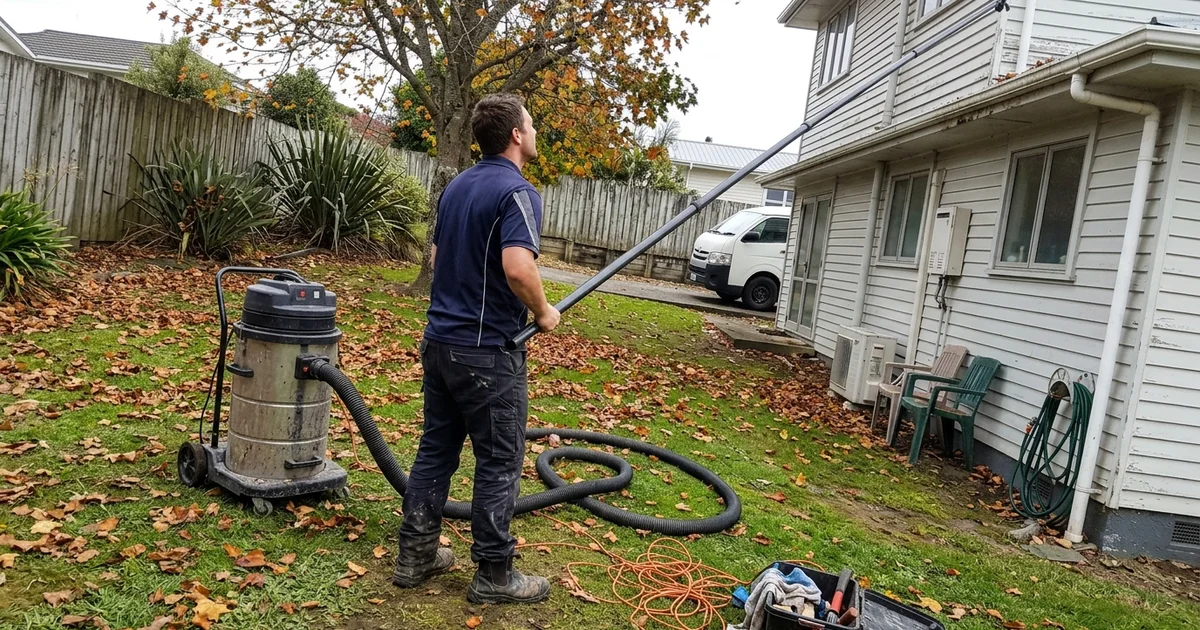
Start with a clear. Most overflow is caused by debris and blocked downpipes, and a full vacuum clear with a downpipe flush solves it. Clearing also lets us see the spouting properly, so if there’s a sagging run or a failed bracket, we can point it out.
| Start with a clear if… | You likely need a repair if… |
|---|---|
| Water spills along the whole run | Overflow keeps returning at the same low point |
| Downpipes gurgle or run slowly | The spouting has pulled away from the fascia |
| You can see leaves, needles or moss | The run sags or the brackets have failed |
If the spouting has the wrong fall, has pulled away from the fascia or keeps overflowing at the same low point, it needs gutter repairs to re-hang it and replace brackets. And if water has been escaping for a long time, it’s worth checking for fascia and soffit damage.
Still wondering why your gutters are overflowing? An overflowing gutter is a problem worth sorting early.
A free quote is the easiest first step. Nobody needs to go on your roof to give you one, so get in touch with Rotorua Gutter Cleaning and we’ll work out whether you need a clear or a repair.