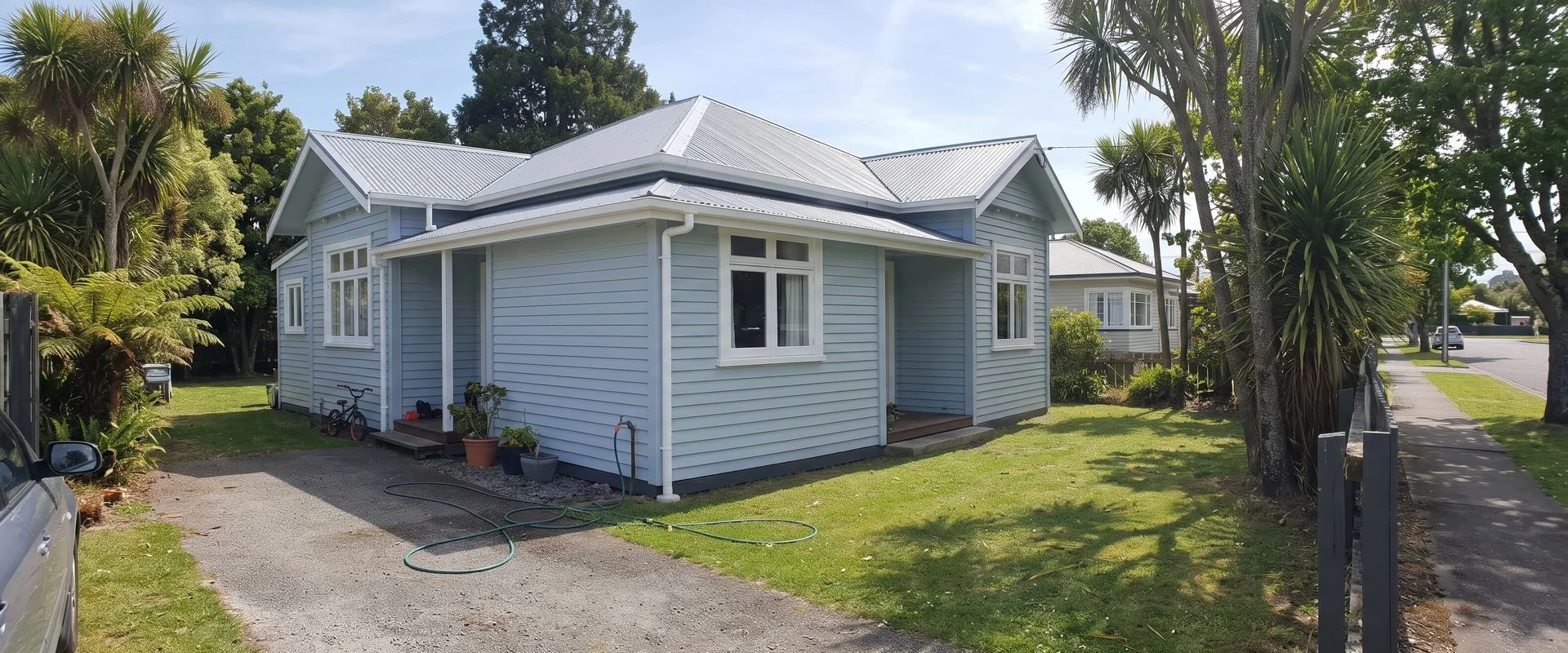
What Is a Soft Wash House Clean?
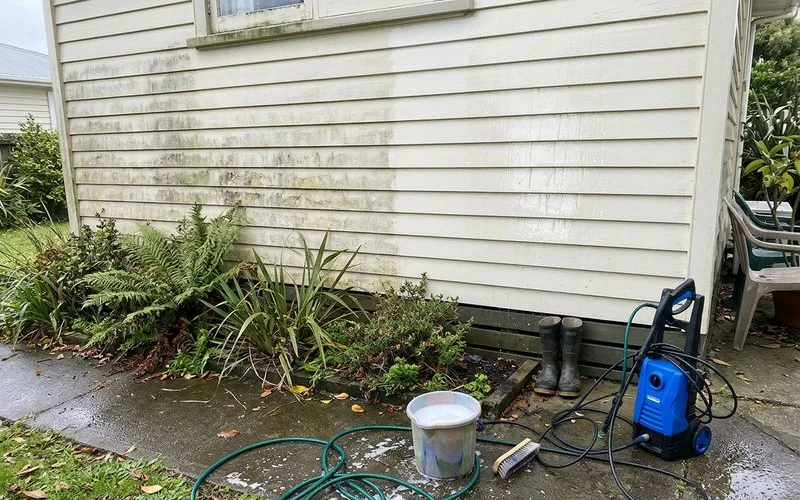
Ever looked at your place and wondered where all that green and grey came from? House washing is the quickest fix, but the method matters.
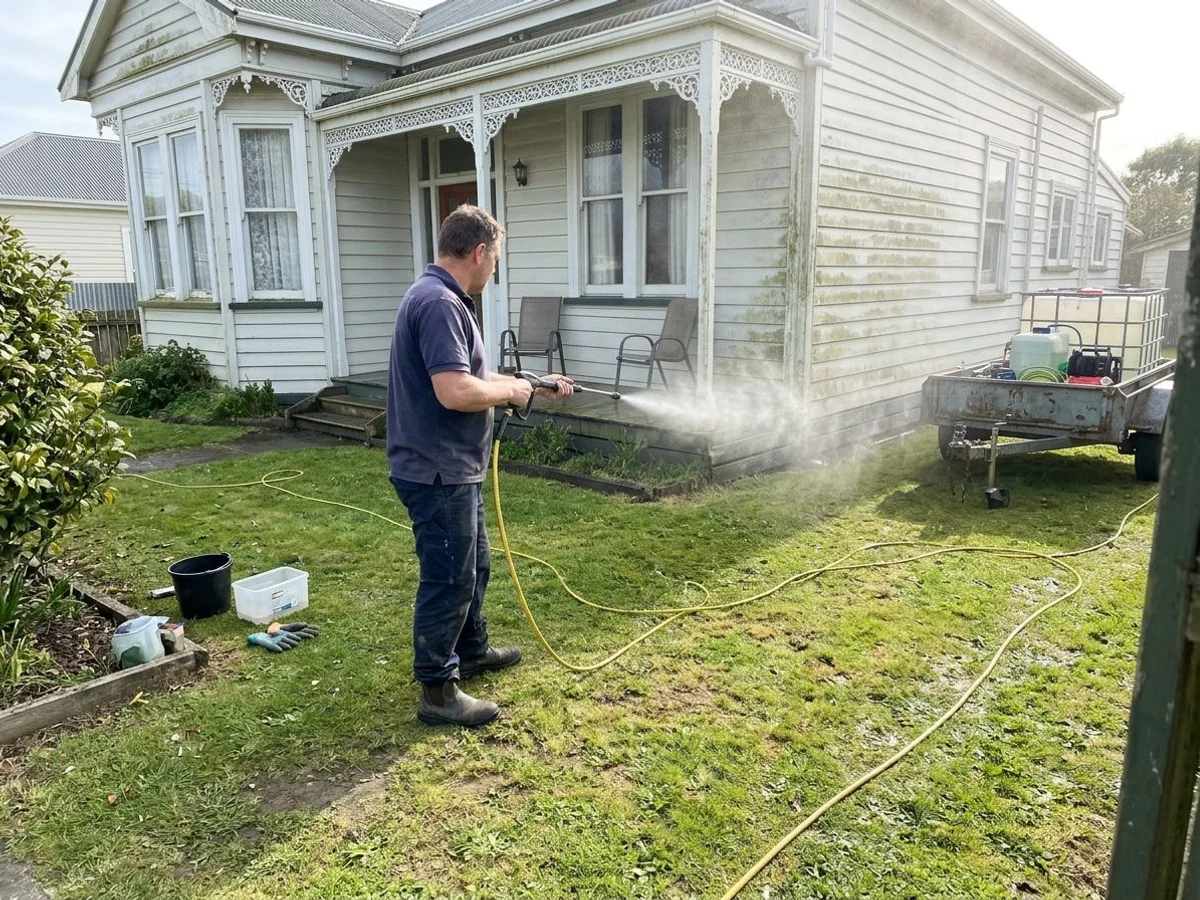
A soft wash is a full exterior clean that uses low pressure and clean hot water instead of a high-pressure blast. It lifts dirt, green algae, black mould and road grime off your walls. It won’t drive water into the laps of your weatherboards or peel the paint.
Around Rotorua, walls get dirty in some very local ways. Lake midges leave a fine residue on cladding, soffits and window frames, especially in lakeside suburbs. Shaded walls grow algae, and steady rain splashes dirt up from gardens and paths.
Over time it all dulls the house and shortens the life of the paint. Resene’s decorating advice is to remove mould or growth within a few months of it first appearing, before it stains or undermines the paintwork.
How Is It Different From Water Blasting?
Water blasting relies on force. On painted weatherboards that force can lift paint, gouge soft timber and push water behind the boards. On plaster it can mark the finish.
Soft washing relies on time and temperature instead. Hot water loosens grime and organic growth. Where a gentle low-pressure detergent clean is needed, the cleaning solution’s surfactant (a wetting agent that breaks grime’s grip on the surface) helps lift dirt so it rinses away easily.
Manufacturers back this up. James Hardie’s 2025 care guide for Hardie Flex Sheet says to wash with low-pressure water and a brush every 6 to 12 months, and it says plainly not to use a water blaster on the cladding.
Older rentals have another reason to be careful. According to Auckland Water Blaster, WorkSafe NZ has warned that high-pressure blasting can disturb asbestos fibres in old roofing or cladding and spread them around the property.
Here’s how the two methods compare:
| Factor | Water blasting | Our soft wash |
|---|---|---|
| How it cleans | Force from high-pressure water | Time and temperature: hot water at low pressure |
| Painted weatherboards | Can lift paint and gouge soft timber | Lifts grime without blasting the paint |
| Water behind cladding | Can push water behind the boards | Low pressure keeps water on the surface |
| Plaster finishes | Can mark the finish | Gentle on plaster |
| Older cladding | WorkSafe NZ warns it can disturb asbestos fibres | No high-pressure blasting |
The result is a clean house without the damage risk.
What Can We Wash?
Painted weatherboards
Weatherboard is the most common cladding in Rotorua, and the one most at risk from high pressure. Our method is designed to be paint-safe.
Blasting can also raise the grain and push moisture into joints. Gentle washing avoids both problems.
Brick, plaster and fibre-cement
Brick and plaster hold algae in their texture. Fibre-cement sheets show grime and streaks. A hot-water soft wash handles all of them.
Taller houses are no problem for us. Two-storey and multi-level buildings are common on our books, and rental owners and property managers often like to have them done in a single visit.
Soffits, eaves and joinery
Soffits and eaves collect cobwebs and midge residue. We rinse them along with windows and joinery so the whole exterior looks finished.
Washing Before You Paint or Sell
Many people book a house wash before repainting. A clean surface helps your painter spot anything that needs prep. It’s worth checking Resene exterior paint compatibility and drying times with them before they start.
Resene suggests washing weatherboards with its Paint Prep and Housewash before repainting. It also loosens the chalky surface on UV-damaged paint, which is handy to know if your paint feels powdery.
Here’s how a wash helps in each situation:
| Situation | Why a wash helps |
|---|---|
| Repainting | Shows up areas needing prep and gives paint a clean surface |
| Between tenancies | Refreshes the exterior for new tenants and inspections |
| Selling | Lifts photos and first impressions |
Want to cover the whole exterior in one visit? Most owners add ground-based vacuum gutter clearing, and some add a roof moss treatment too. Bundling usually reduces the overall cost.
Ready to freshen up your place? Get in touch and we’ll talk you through the best option for your house.