How Often Should Gutters Be Cleaned in Rotorua?
For most Rotorua homes, the answer is once or twice a year. Open sections with few trees can usually get by with a single clear in late autumn. Homes under pines, redwoods or big deciduous trees often need two or three clears a year to stay ahead of the build-up.
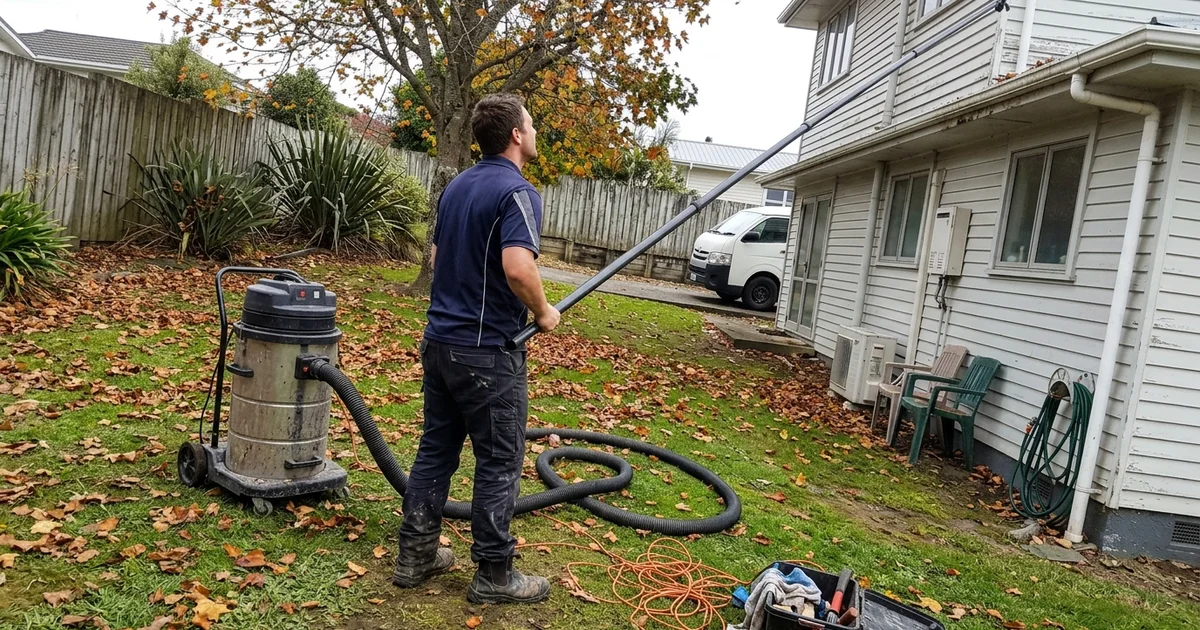
If you’re working out how often you should clean your gutters in Rotorua, this guide gives you a realistic gutter cleaning schedule instead of a guess. It’s written for homeowners, landlords and property managers, including anyone with a two-storey house or a few rentals to look after. If you’d rather hand the job over, our gutter cleaning in Rotorua is done entirely from the ground. Every downpipe gets flushed through to the soak hole.
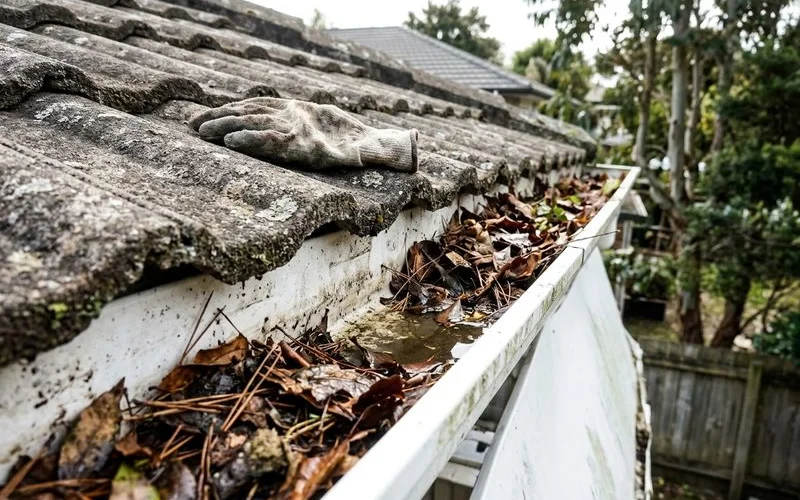
The range is wide because no two sections drop the same amount of debris. A new subdivision home with a bare lawn and a villa under an old oak face completely different loads. Rotorua’s mean annual rainfall is 1,355.6mm, according to Figure.NZ’s 1991 to 2020 climate figures, so whatever lands in your spouting gets soaked and packed down fast.
Kiwi Spouting’s advice lines up with this: once a year as a minimum, and every six months for properties with lots of trees. So rather than pick one number, it helps to look at what’s actually landing on your roof.
Quick rule of thumb
If you can see trees from your roof line, plan on at least two clears a year. If you can’t, one well-timed clear in late autumn is usually enough.
What Changes How Often You Need a Clean?
Four things make the biggest difference around Rotorua.
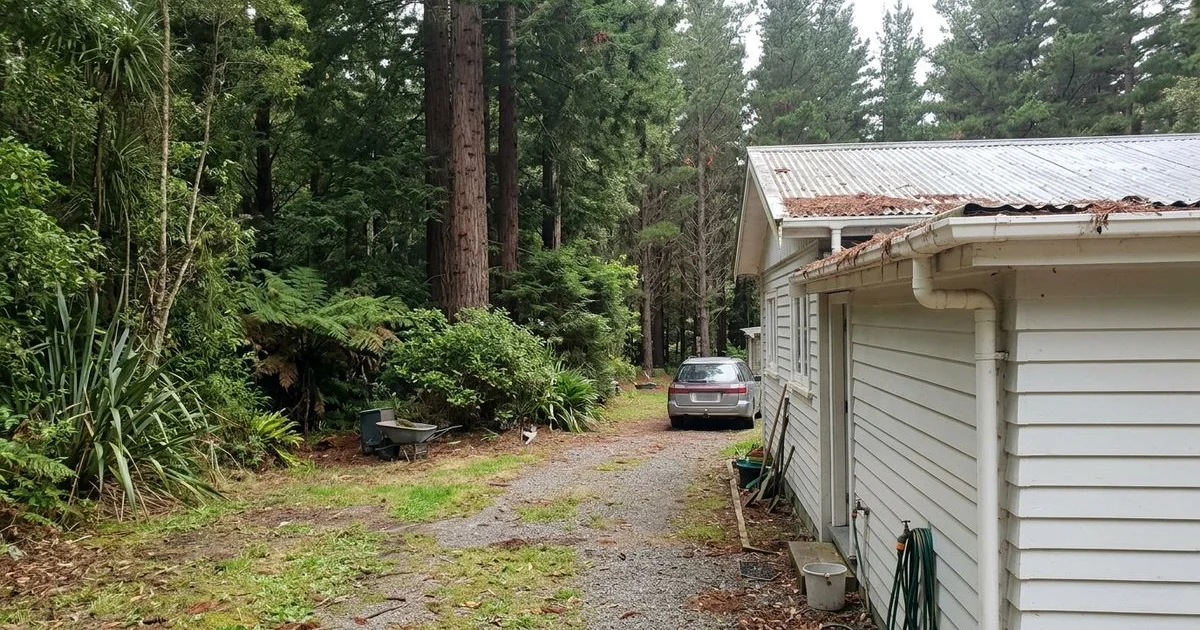
- Tree cover. This is the big one. Leaves, twigs, seed pods and bark all end up in the spouting. Pine needles are the worst because they knit together into a mat that holds water and blocks outlets. If your section is tree-lined, our guide to gutters on tree-lined sections goes into more detail.
- Geothermal deposits. In parts of Rotorua, sulphur from geothermal activity settles on roofs and washes into the spouting. Mixed with wet debris it becomes acidic sludge, which is hard on metal spouting and fixings. Regular clearing keeps it from sitting there for months.
- Storm season. Heavy Bay of Plenty downpours test every gutter at once. A half-blocked downpipe that copes with light rain can overflow badly in a big storm. NZ Herald has reported MetService orange heavy rain warnings covering Rotorua with 100mm to 140mm forecast in 24 hours, so clearing before the wetter months makes a real difference.
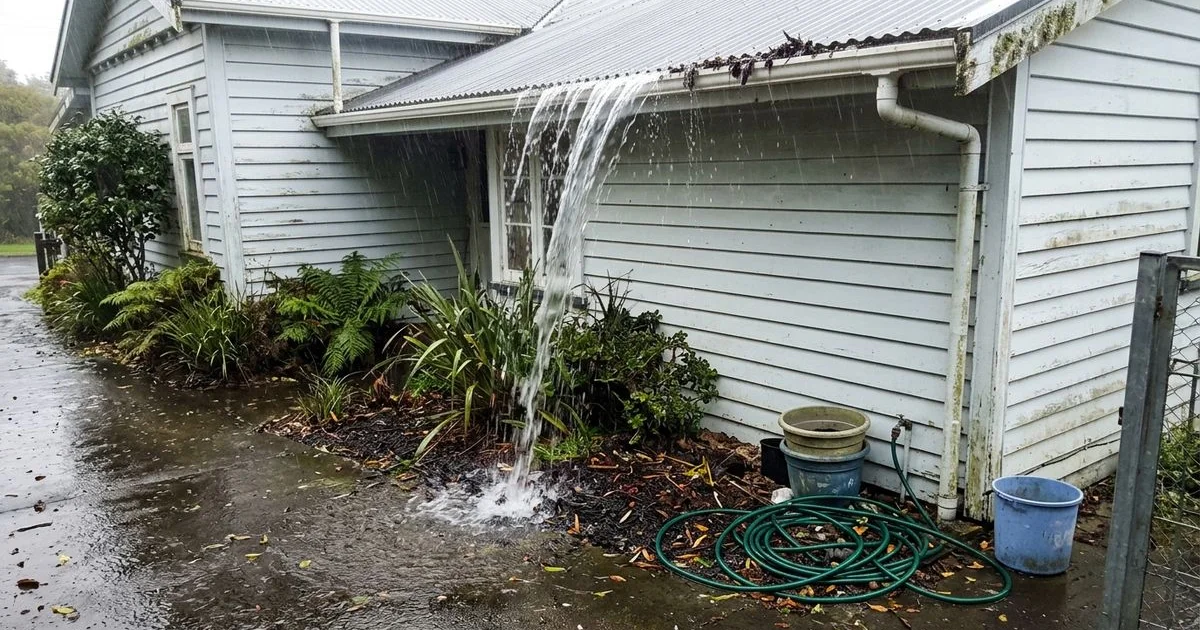
- History of overflow. If your spouting has overflowed before, it’s telling you something. Either it fills faster than you think, or there’s a blockage lower down in the downpipe or soak hole. BRANZ recommends giving external gutters a visible overflow point so occupants notice problems early, and a spill over the front edge does that job for you.
The geothermal point matters more than most people expect. BRANZ field trials in Rotorua found copper and mild steel suffered serious corrosion, and zinc did too where sulphur gas levels were high. Aluminium and stainless steel corroded more slowly.
Location matters too. Rotorua Lakes Council’s geothermal inspector, Peter Brownbridge, told the Rotorua Daily Post that parts of Lynmore can at times see higher hydrogen sulphide, while Western Heights is the least affected because the wind is mostly from the west.

Use this table as your starting point, then adjust once you see how fast your own spouting fills.
| Property type | Typical interval | Why |
|---|---|---|
| Open section, no overhanging trees | Once a year | Light debris, mostly windblown dust and silt |
| A few trees nearby | Once or twice a year | Leaf drop in autumn plus spring flowering debris |
| Heavy canopy (pines, redwoods, shelterbelts) | Two to three times a year | Needles and leaves refill spouting quickly |
| Rental or multi-unit property | Before winter and between tenancies | Fewer surprises, clear records for owners |
A Seasonal Gutter Checklist for Rotorua
You don’t need to climb anything to keep an eye on your gutters. Most checks can be done from the ground.
- Late autumn (the main clear). Once the bulk of the leaves have dropped, book the year’s main clean. Tradie Tools NZ puts the best window at April to June, after the main leaf fall and before the winter rains. Make sure the downpipes are flushed too, not just the top of the gutter.
- Winter. Watch your spouting during heavy rain. Water pouring over the front edge, or a downpipe that isn’t running when it should be, means something is blocked.
- Spring. Trees flower and drop pollen, catkins and seed. This fine material settles in the spouting and turns into sludge. A spring check is worth it if you have deciduous or flowering trees nearby.
- Summer. This is a good time to look for sagging runs, leaking joints or plants growing in the spouting. The NZ Metal Roofing Code of Practice points out that a steeper fall of 1:200 (5mm per metre) gives faster flow and better self-cleaning, so a sagging run that loses its fall will hold water and debris. Small repairs are easier to sort before the next wet season.
When Should You Book More Often?
Book an extra clear if any of these sound like your place:
- Your gutters have overflowed in the last year
- You have pines, redwoods or eucalyptus near the roof
- The house is a rental and you want a clean record between tenants
- Moss on the roof keeps washing down into the spouting
- You’re near geothermal activity and have metal spouting
Landlords and property managers often set a fixed schedule across their properties. Tenancy Services says the landlord is usually responsible for outside jobs like cleaning the gutters, and Harcourts notes that under section 45 of the Residential Tenancies Act, landlords should have gutters cleared regularly where needed to keep drainage working.
Our guide to gutter cleaning for rental properties covers how to plan that without needing tenants at home.
Finding the Right Rhythm for Your Home
So, how often should you clean your gutters in Rotorua? The right interval is the one that stops water spilling over before your next clean.
Start with the table above, then adjust. If your gutters are always packed when we arrive, shorten the gap. If they’re nearly clean, you can stretch it.
A simple plan that works for most homes:
- Book the main clear in late autumn
- Watch the spouting during the first heavy winter rain
- Add a spring clear if trees flower or drop seed near your roof
When you’re ready to book, we clear your spouting from the ground with industrial vacuum suction, flush every downpipe, and let you know what we found. Every quote is free, and we work Monday to Friday, 8am to 5pm.