Where Do Gutters Usually Leak?
A leaking gutter drips or seeps from one spot, usually a join, a corner or the underside of the spouting. Overflow is different, because that’s water spilling over the front edge. If you’re asking why are my gutters leaking, the answer is almost always a part that has failed, and targeted gutter repairs in Rotorua usually fix it.
Below, we cover the most common leak points, how PVC and metal spouting fail differently, and how to tell a leak from overflow while you’re standing on the lawn in the rain.
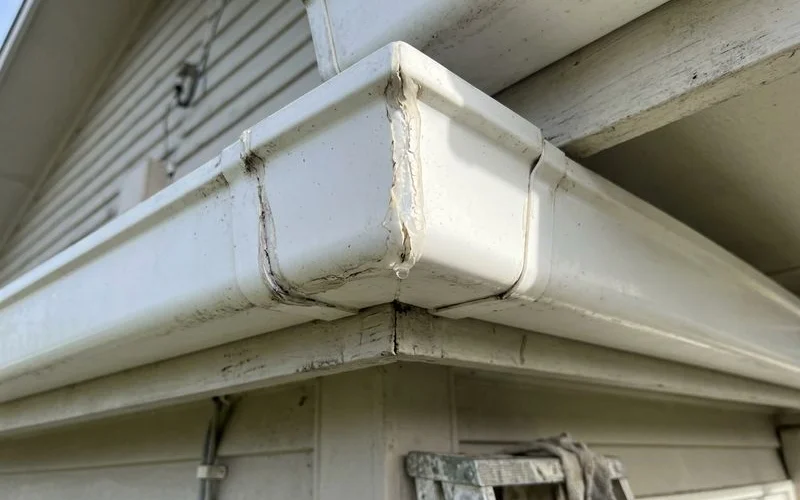
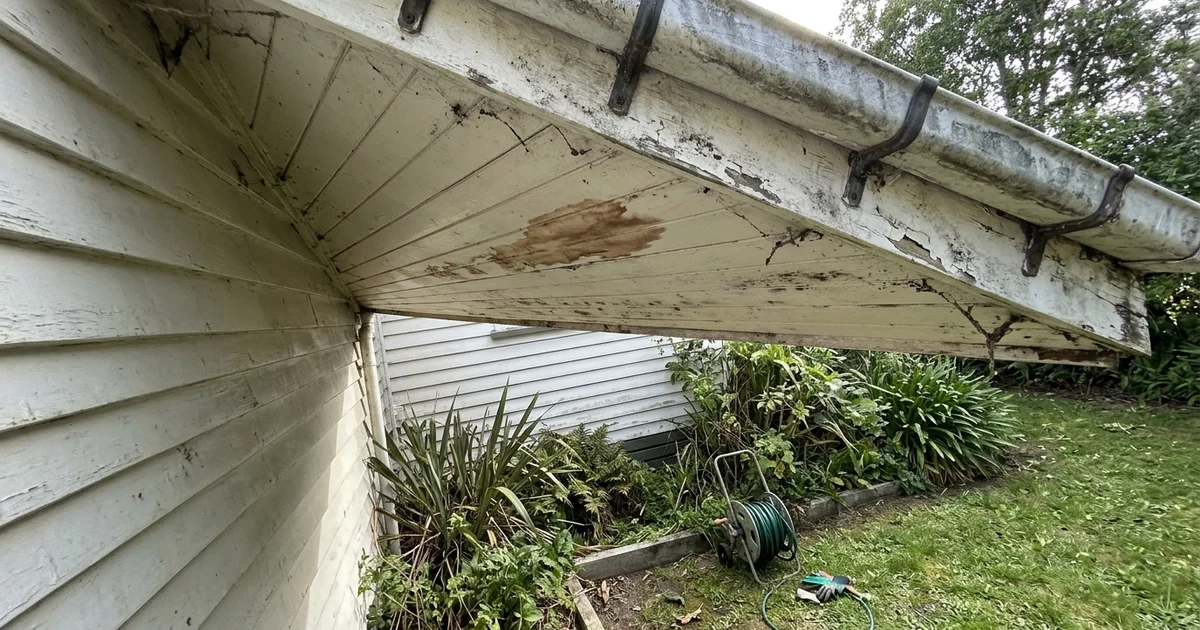
Most leaks start small. A joint lets a little water through, it runs behind the spouting and down the fascia, and over a few seasons the timber starts to stain and soften. On a two-storey house it’s easy to miss from the ground, so look for streaks on the fascia or wall below the spouting.
The key difference
A leak drips from a point underneath or at a join. Overflow pours over the front edge. They have different causes and different fixes.
The Most Common Leak Points
Spouting leaks cluster in six places: joints, mitres, end caps, outlets, pinholes and failed sealant. Each one fails for a slightly different reason.
- Joints. Where two lengths of spouting meet, a connector, rivets or sealant holds them together. Seals age and let go, so leaking spouting joints and a gutter leaking at seams are the classic complaint.
- Mitres. Corners are a weak spot. The mitre carries water from two directions, and the sealant takes a lot of movement as the spouting expands and contracts in the sun.
- End caps. The caps at the end of each run can pop off or loosen, especially if the run has been knocked or overloaded with wet debris.
- Outlets. The dropper outlet where spouting meets the downpipe handles every drop that passes through. Loose pop outlets and failed seals here are very common.
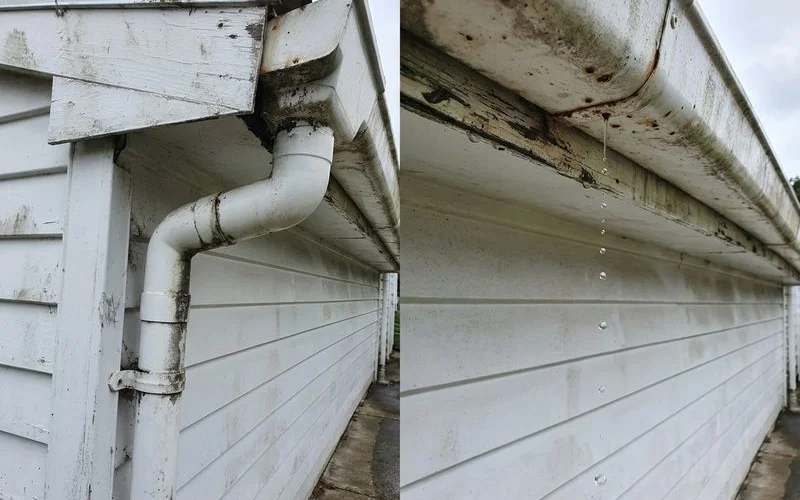
- Pinholes. These are small holes in the floor of metal spouting. They usually appear where wet debris has sat for a long time and corrosion has worked through.
- Failed sealant. Old sealant cracks, shrinks and peels away. Once it lifts, water finds the gap quickly.
Installation plays a part too. Forum users on Geekzone, the NZ tech and home forum, often blame leaking corners on sagging runs with too few brackets and no allowance for expansion. Marley’s installation guide sets a maximum bracket spacing of 500 mm. It also calls for an expansion joiner or expansion outlet once a run passes 10 metres.
Metal spouting has its own quirk. One Geekzone user reported that metal joints sealed with silicone alone tend to start leaking after a few years. If your spouting is a few years old and leaking at the laps, that’s a likely culprit.
How PVC and Metal Spouting Fail Differently
PVC and metal spouting both leak, but for different reasons. PVC fails at the seals and joints, while metal fails through corrosion.
| PVC spouting | Metal spouting | |
|---|---|---|
| Typical leak point | Joints, rubber seals and glued connections | Riveted joints, outlets and the gutter floor |
| Main cause | Seals ageing and UV breakdown | Corrosion from trapped wet debris |
| Rotorua factor | Expansion and contraction in sun | Geothermal sulphur speeding up corrosion |
| Installer check | Brackets at 500 mm maximum, expansion joiner on runs over 10 m | Sealed overlaps and rivets, debris cleared regularly |
| Usual fix | Reseal or replace joint components | Reseal joints; replace badly corroded lengths |
PVC doesn’t rust, but its seals and glued joints age with sun and temperature changes. Joints loosen as the spouting expands and contracts. Marley’s guide notes that dark colours need extra expansion allowance, which matters on a sun-baked, dark-painted run.
Metal spouting, including painted steel profiles, is strong but vulnerable to corrosion. Corrosion starts on the floor of the gutter and at fixings, often where debris has been sitting for months. Colorsteel’s own care advice says to clear debris from places rain can’t reach, and it ties that cleaning to keeping your warranty valid.
The Rotorua factor is real. In Rotorua, geothermal sulphur mixed with wet leaves creates acidic sludge that speeds corrosion up, particularly near geothermal areas. The NZ Herald reported that corrosion rates for mild steel in a geothermal area were in some cases more than 10 times higher than in rural and marine settings. Local property maintenance owner Mike Quigley put it simply: “Basically, it’s like having a house on the beach.”
Is It a Leak or Overflow?
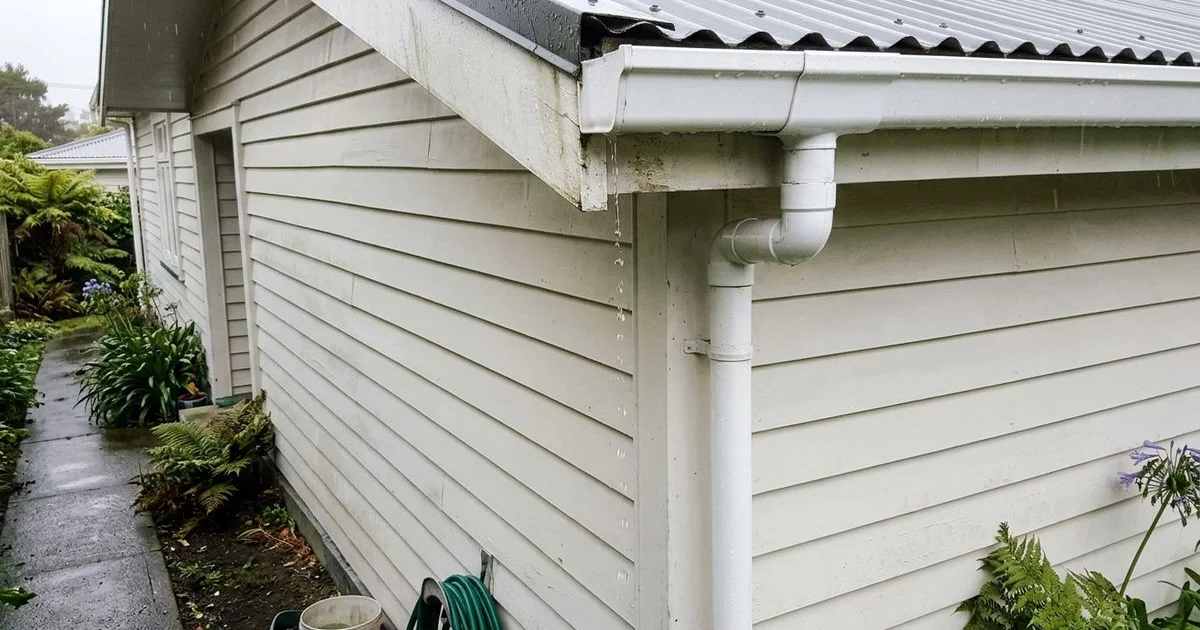
Next time it rains, watch where the water comes from. Dripping from underneath or at a join is a leak, and pouring over the front edge is overflow.
- Dripping from underneath or at a join: that’s a leak. Look for drips at corners, outlets and connectors.
- Pouring over the front edge: that’s overflow, usually from blockages or the wrong fall. Our guide on overflowing gutters covers the causes.
- Water running down the wall behind the spouting: could be either, or a gap between the spouting and fascia. This one needs a closer look.
Sometimes it’s both. A blocked gutter holds water for longer and puts extra pressure on every joint, which can make a weak seal start to leak.
Fall matters here as well. The Metal Roofing Manufacturers’ code of practice sets a minimum gutter fall of 1:500 (2 mm per metre). It recommends 1:200 (5 mm per metre) for faster flow and better self-cleaning. A sagging run with standing water is a leak waiting to happen.
If you manage a multi-level building or a rental, a quick phone video from the lawn during heavy rain shows exactly where the water leaves the spouting. It also gives us something concrete to work from.
Repair Options and When to Call Us
Most leaks can be repaired, and spouting leak repair is usually a same-visit job. Here’s how we work through it:
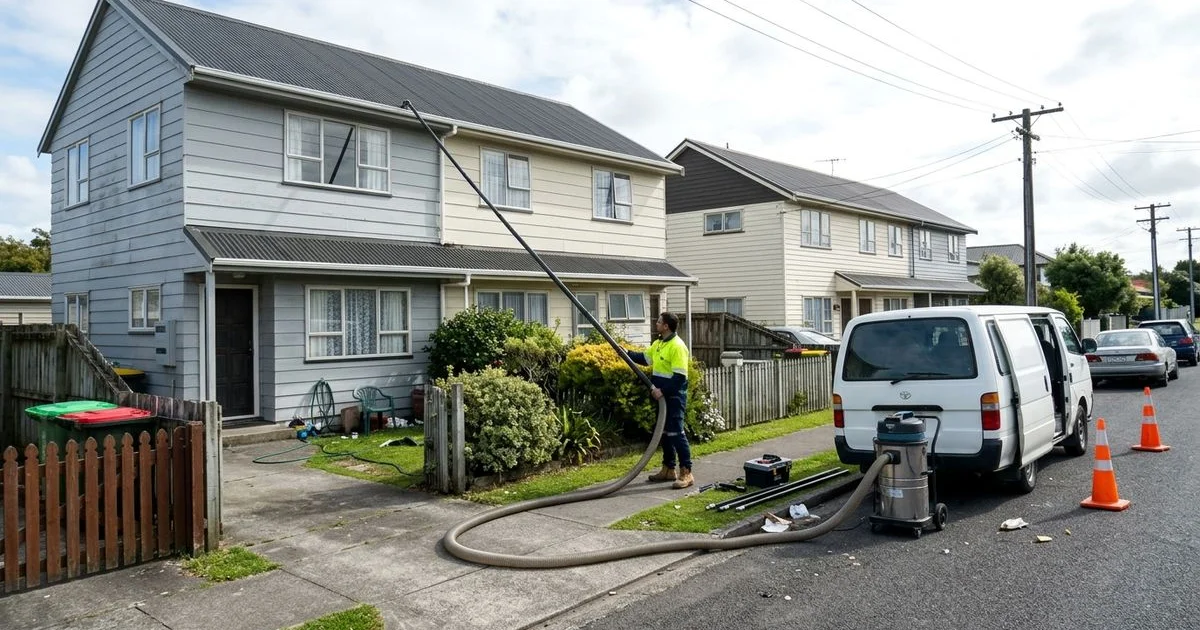
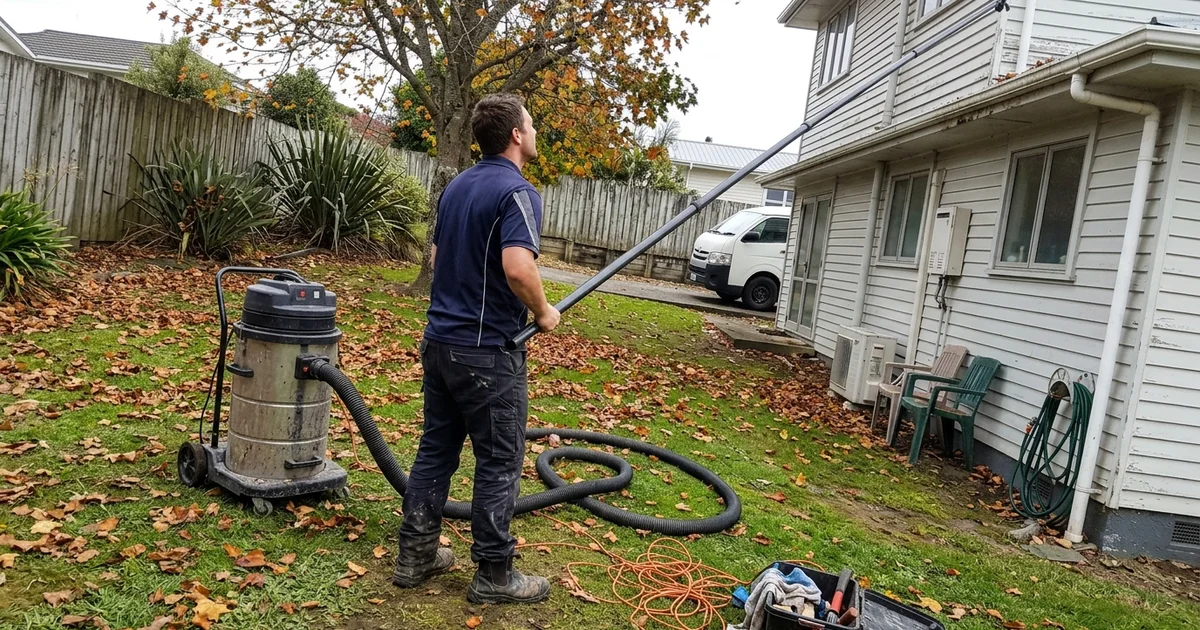
- A vacuum clear, so we can see the spouting properly.
- Resealing of leaking joints, mitres, end caps and outlets.
- Replacement of loose or failed brackets, so the spouting holds its fall.
- A flush of the downpipes, to check the whole system drains.
If corrosion has spread along several lengths, or pinholes are appearing in multiple places, replacement usually makes more sense than patching. We’ll tell you honestly which way we’d go at the free quote.
Timber needs a look too. A BRANZ weathertightness guide for diagnosing leaky buildings lists rainwater outlets and the roof edge and gutter junction among the spots that commonly let water in. If water has been leaking for a while, check the wood behind it, and our guide on fascia and soffit damage explains the warning signs.
Still not sure why your gutters are leaking? Get in touch for a free quote, and we’ll find the leak and tell you what it needs.