Why Do Tree-Lined Sections Block Faster?
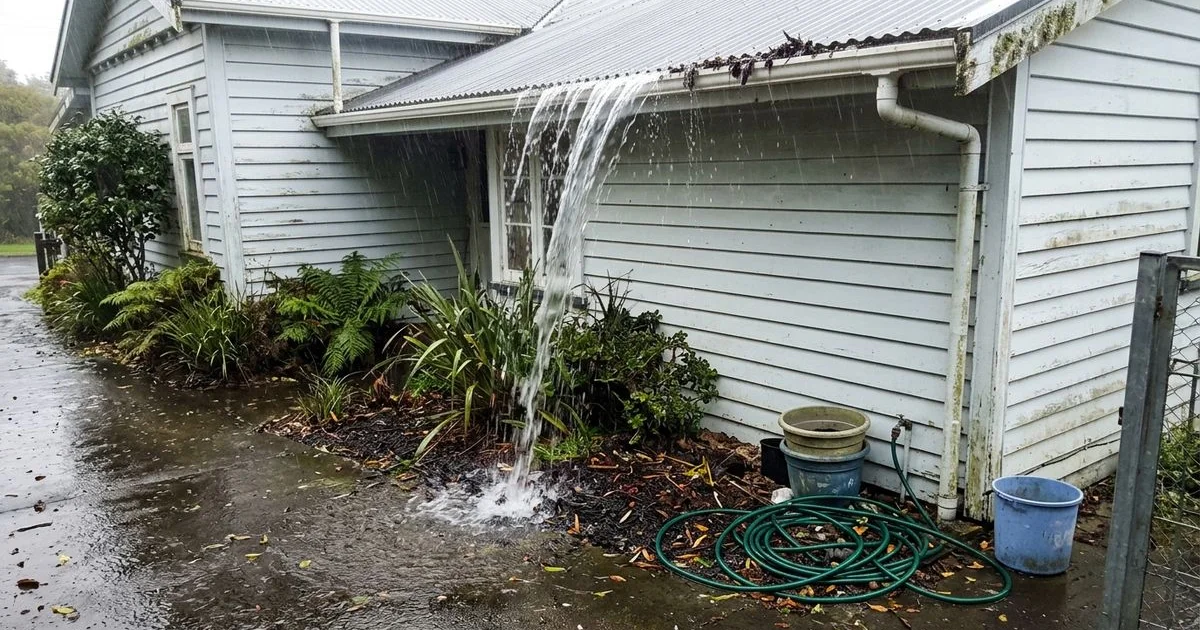
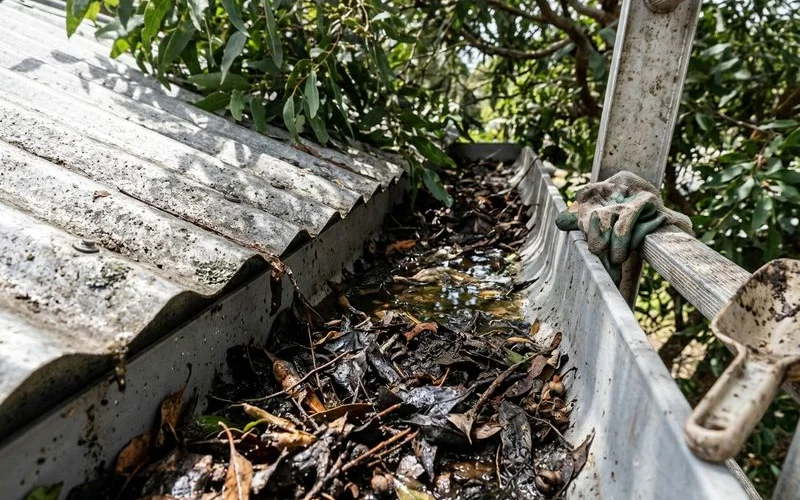
Gutters under trees block faster because the roof catches debris all year and sheds it straight into the spouting. Pine needles in gutters are usually the worst offenders.
If you live under trees, you already know the feeling. You clear the gutters and a few months later they’re full again.
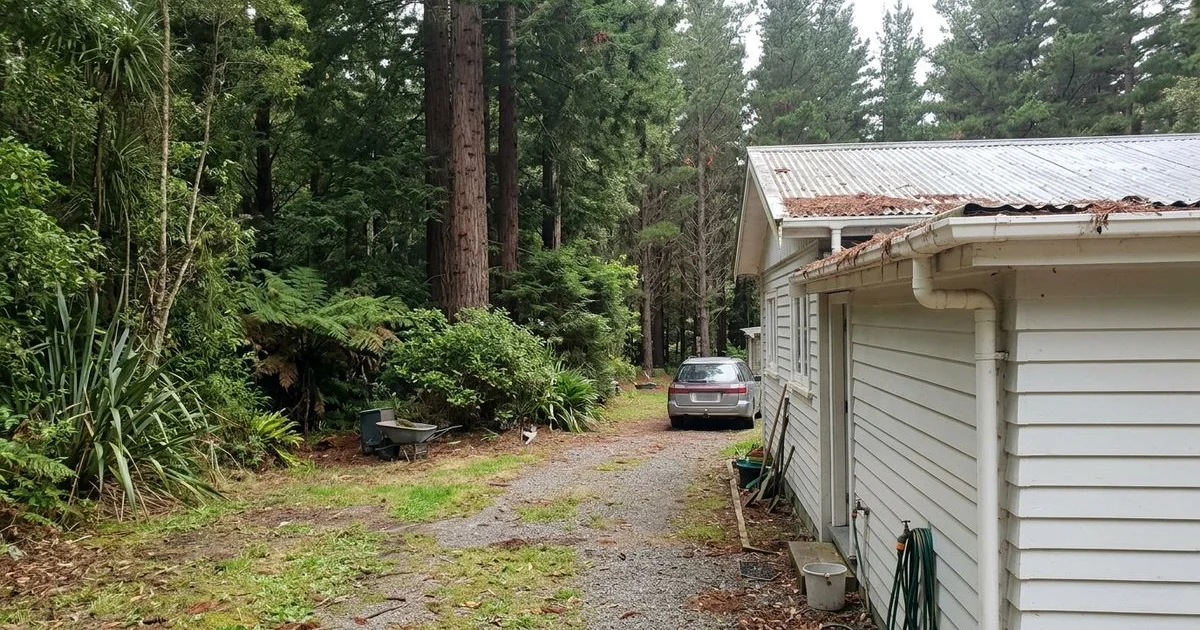
Around Rotorua, many sections back onto pine plantations, redwoods or big native trees. That makes this one of the most common reasons spouting overflows. According to the Redwoods Whakarewarewa Forest website, radiata pine makes up most of the neighbouring forest.
Different trees cause different problems, and knowing which you’re dealing with helps you set the right cleaning schedule.
The short version
Pine and redwood needles block outlets. Deciduous leaves pile up. Native litter rots into sludge. All three need clearing more often than an open section.
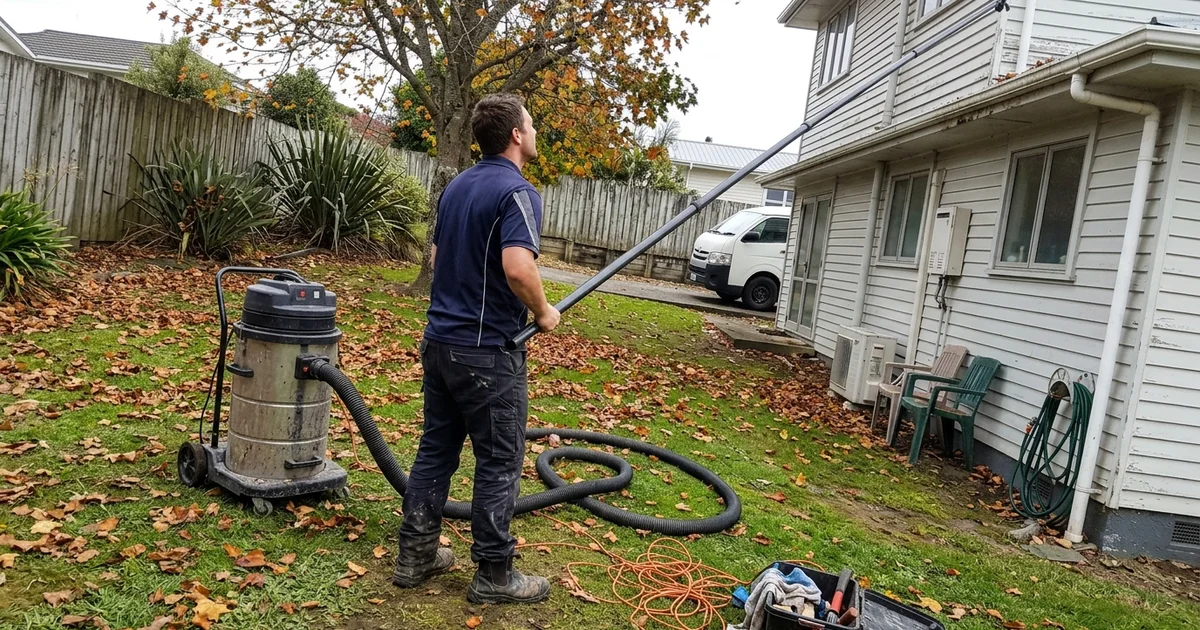
The good news is that a regular, thorough clean keeps it under control. Our vacuum gutter cleaning lifts out even packed, wet debris from the ground, then flushes every downpipe so the whole system drains.
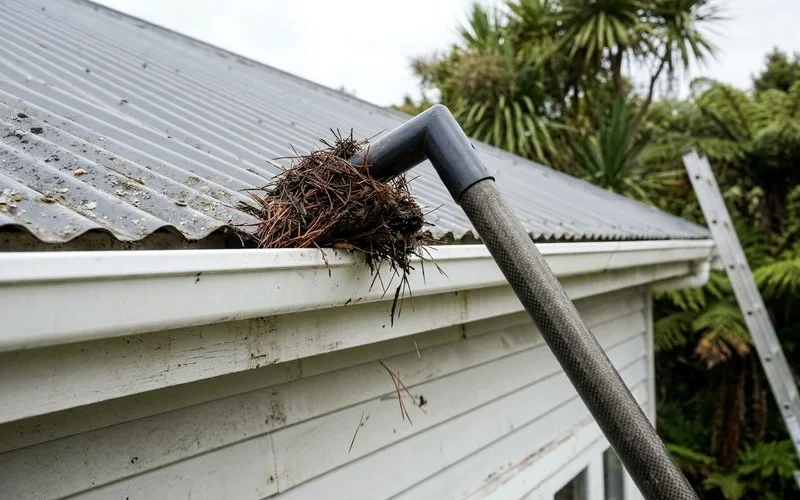
There’s a safety reason to stay on top of it too. Fire and Emergency New Zealand advises keeping gutters and the areas around decks clear of dead leaves, debris and pine needles. Its rural interface guidance notes that embers can travel as far as two kilometres from a fire.
How Do Pine Needles in Gutters and Other Tree Debris Behave?
Each tree type clogs spouting in its own way: needles mat, leaves pile and native litter rots. Knowing which one you have tells you where to look first.
- Pine and redwood needles mat together. Needles are thin and light, so they slide easily into spouting and down toward the outlets. Once there, they knit into a dense mat that holds water like a sponge, grows moss and eventually seals off the dropper outlet. Redwood needles in spouting are especially common because they’re so fine and fall year-round, which is why homes near the Redwoods in Lynmore see such fast refill cycles.
- Deciduous leaves pile up. Oaks, maples, poplars and fruit trees drop most of their leaves in a few weeks in autumn. Shingle Roofers NZ says liquidambars, maples and ash can completely fill gutters within weeks in tree-lined suburbs. Leaves in gutters are easy to see, but heavy in volume.
- Native litter rots into sludge. Many native trees drop leaves, seed pods and small twigs steadily through the year. Shingle Roofers NZ notes that pōhutukawa and other natives shed bark, seed cases and fine leaf litter year-round, not just in autumn. In wet spouting, this litter breaks down quickly into a dark, silty sludge that’s heavy, holds water and washes down into downpipes and soak holes.
- Eucalyptus sheds bark and leathery leaves. Long strips of bark and tough leaves can lodge across outlets and are slow to break down.
| Debris type | How it behaves | Main risk |
|---|---|---|
| Pine and redwood needles | Mats into a dense, wet layer | Blocked outlets and downpipes |
| Deciduous leaves | Piles up quickly in autumn | Overflow along the whole run |
| Native leaf litter | Rots into silty sludge | Heavy, wet build-up and soak hole silt |
| Eucalyptus bark and leaves | Lodges across outlets | Sudden blockages |
Gutter guards aren’t a cure for needles. Prime Life NZ says pine needles are thin enough to pass through most guards and still pack into dense, water-resistant mats. Shingle Roofers NZ adds that fine debris can clog the mesh itself.
How Often Should You Clear Under Heavy Canopy?
For most homes with trees overhanging the roof, plan on two to three clears a year. NZ trade guides land in the same range. TradieTools NZ’s 2026 spouting guide suggests three clears a year under dense leaf fall, and Shingle Roofers NZ says three to four.
A good pattern is:
- Late autumn, after the main leaf drop (usually April to June)
- Late winter or early spring, before trees flower and drop pollen and seed
- An extra clear if you’re right on the forest edge or have pines close to the house
Sections with only a few trees nearby can often manage with one or two. Our guide on how often to clean gutters has a simple table to help you decide.
Landlords and property managers have an extra reason to book a schedule. The Healthy Homes Standards guidance from Tenancy Services says rental gutters and downpipes shouldn’t be blocked with leaf matter or other debris.
If you’re in a forest-edge suburb, our page on gutter cleaning in Lynmore explains how we handle redwood and pine debris there.
Why Vacuum Clearing Handles Packed Sludge Better
Vacuum clearing handles packed sludge better because suction lifts wet material out, where a hand scoop tends to drag it along the gutter. Scooping by hand from a ladder works on dry leaves, but it struggles with wet, compacted needles and sludge.
| Hand scooping from a ladder | Vacuum clearing | |
|---|---|---|
| Wet, packed needles and sludge | Struggles, and smears it along the run | Lifts it straight out |
| Mess on decks and gardens | Usually drops a fair bit | Debris goes into sealed containers |
| Downpipes | Often stops at the gutter, leaving the downpipe half-blocked | Each downpipe is flushed with clean water |
| Height | Needs a ladder, which is unsafe on slopes and garden beds | Reaches up to 3 storeys from the ground |
Industrial vacuum suction matters most on tree-lined sections, where slopes and garden beds make ladders unsafe. Once the gutter is clear, we flush each downpipe so it drains to the soak hole.
Ladders carry real risk, too. A 2013 NZ Herald report on ACC figures counted 9,421 new ladder-related claims in a single year. Keeping your feet on the ground is a good call on tall or sloping sections.
Living Happily With Your Trees
You can keep your trees and still protect your house. Trees are part of what makes Rotorua sections great, and you don’t need to cut them down.
Trimming branches that touch the roof helps a little. The real fix is a regular clear on a schedule that matches your trees.
If pine needles in gutters or leaves in gutters keep overflowing your spouting, a free quote is a simple first step.