What Are Gutter Repairs?
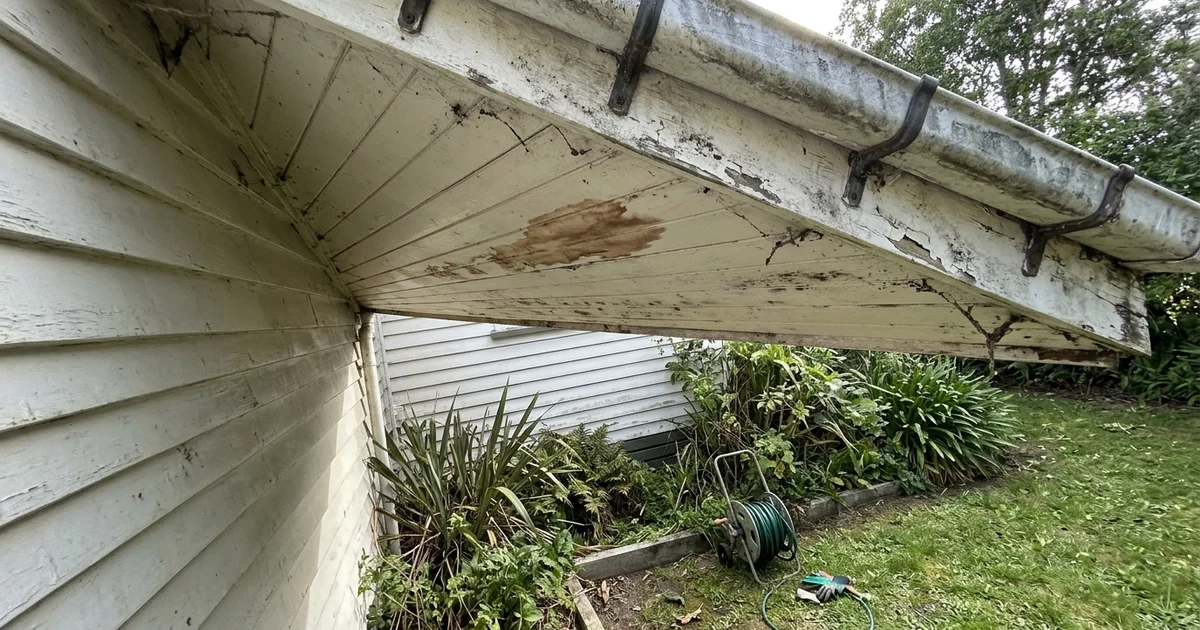
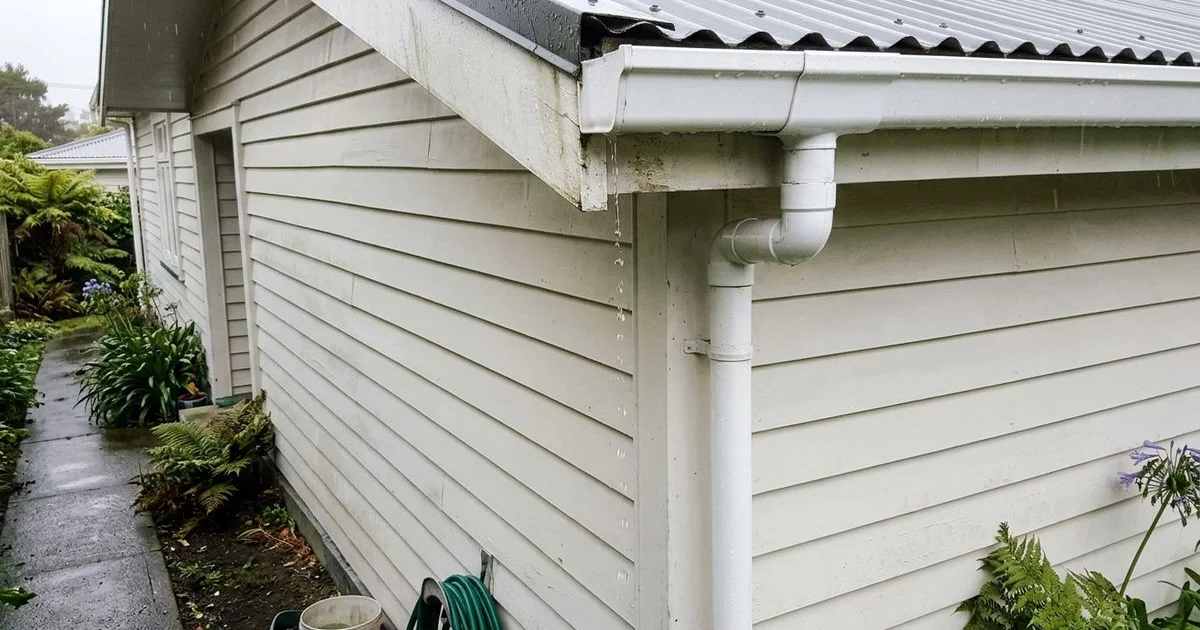
Noticed a drip down the wall or a dark stain under the eaves? That’s usually your spouting letting water out where it shouldn’t.
Gutter repairs fix that. They cover:
- Leaking joints and mitres
- End caps that have popped
- Outlets that drip
- Sagging runs that no longer hold their fall
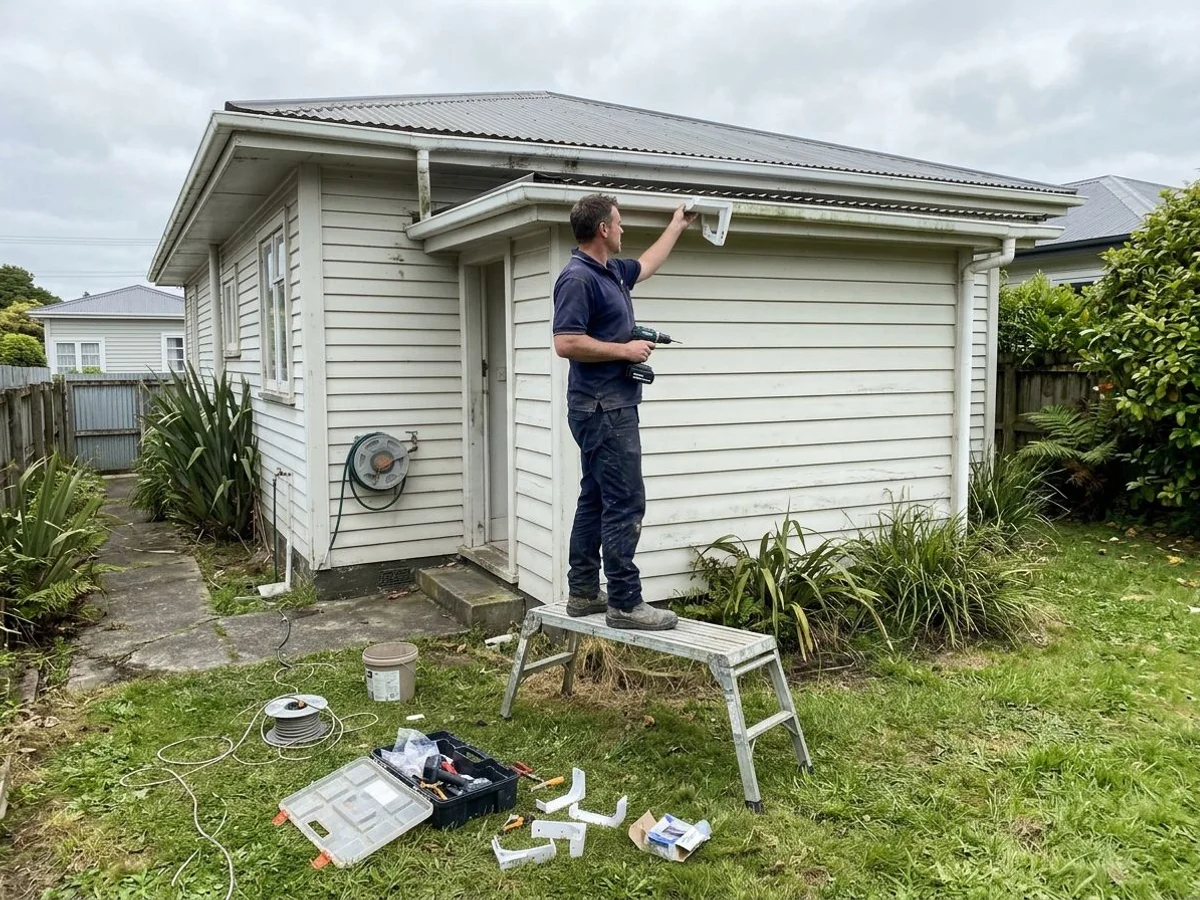
- Brackets that have rusted or bent in a storm
Here at Rotorua Gutter Cleaning, we see these problems every week. A small leak never stays small, though. Water runs behind the spouting, soaks the fascia boards, stains the soffits and can work its way into wall framing.
The NZ Building Code Clause E2 (External Moisture) is all about keeping water out of the building. Clause E1 covers surface water. According to the NZ Metal Roofing Code of Practice, E1/AS1 doesn’t strictly require spouting, but it does require that water gathered by your roof doesn’t enter the building or cause damage. Spouting is the usual way to meet that, so it’s your first line of defence.
If you rent out a property, there’s another reason to act. Tenancy Services says a rental must have efficient drainage, guttering and downpipes under the healthy homes standards. A leaking run on a rental can quickly become a compliance headache as well as a repair job.
Which Spouting Problems Do We Fix?
Leaking joints, mitres and outlets
Most leaks start at a join. On Marley PVC spouting (Stormcloud and Classic), the rubber seals and glued joints age and let go. On Colorsteel and ColorCote metal spouting, riveted joints and pop outlets can work loose.
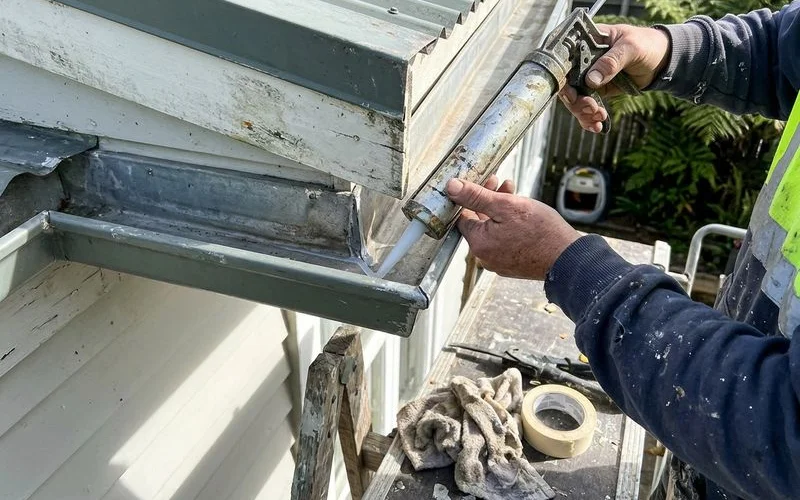
We clean the joint back, reseal it with a neutral cure silicone, and check the expansion joints are doing their job. Neutral cure matters on metal. SikaSeal Roof & Gutter, for example, is a neutral cure sealant that its data sheet lists as non corrosive. Selleys backs its Roof & Gutter Silicone with a 25-year guarantee against cracking, crumbling and peeling.
Sometimes a reseal isn’t enough. Marley designs its Stormcloud, Typhoon and Classic systems for modular repair, so you can replace just the damaged section instead of the whole run. Marley’s own method is to cut 50mm inside the bracket on either side of the damage, then solvent cement a new piece in with Marley MCS Solvent Cement.
Sagging runs and failed brackets
When a run sags, water pools in the low spot instead of draining. Debris settles there too, which makes it heavier and sag more. It’s a cycle that only gets worse.
We re-hang the run to the correct gutter fall and replace tired internal or external fascia brackets. That works whether you have box spouting, half-round or quarter-round profiles. The NZ Metal Roofing Code of Practice sets a minimum fall of 1:500 (2mm per metre). A steeper 1:200 (5mm per metre) drains faster and clears debris better, though it can look uneven against the fascia on longer runs.
Storm damage
Heavy Bay of Plenty storms and falling branches can bend spouting and rip brackets off the fascia. In August 2025, the NZ Herald reported a severe hailstorm that blanketed parts of the region in thick white hail. Weather like that tests every bracket and joint on the roofline.
We repair the damaged section and reconnect downpipes so the whole system drains again. For taller houses and multi-level buildings, we do the work at height, so you or your tenants don’t have to climb a ladder.
Why Does Spouting Fail Faster in Rotorua?
Rotorua is hard on spouting. Three things work against it:
- Geothermal hydrogen sulphide (H2S): It speeds up corrosion of metal spouting and fixings, especially near Whakarewarewa.
- Wet pine needles and leaves: They hold acidic water against the gutter floor for weeks.
- Heavy downpours: They test every weak joint at once.
The H2S problem is well documented. A Steel & Tube specifiers guide from 2005 notes that the gas can be drawn into rainwater downpipes and build up in gutters. In damp conditions it forms sulphuric acid, which leads to early corrosion of guttering and downpipes. The same guide suggests fitting a water trap at the base of downpipes in geothermal areas.
A Rotorua Daily Post report found similar results locally. Corrosion rates for mild steel in a geothermal area were in some cases more than 10 times higher than in rural and marine settings. Local building inspectors and maintenance operators also said metal rusts much faster in high-sulphur parts of town.
That’s why we often pair a repair with vacuum gutter clearing in Rotorua and a full downpipe flush. Clearing first lets us see every joint properly, and bundling the two usually lowers the total cost.
If you’re not sure whether you have a leak or an overflow, our guide on why gutters leak explains how to tell the difference from the ground.
Repair or Replace?
If the damage is limited to a few joints, brackets or one section, a repair is usually the sensible choice. When corrosion or sagging runs along several lengths, or the system is near the end of its life, replacement often makes more sense.
| What you’re seeing | Usually the better call | Why |
|---|---|---|
| A few leaking joints, mitres or outlets | Repair | The damage is limited, so resealing restores the run |
| One sagging section or a handful of failed brackets | Repair | Re-hanging and new brackets bring back the fall |
| Storm damage to a single length | Repair | Only one section needs work |
| Corrosion or sagging along several lengths | Replace | The problem runs through the system, not one spot |
| System near the end of its life | Replace | Repairs would only buy a short time |
We’ll give you an honest view at the free quote, and we also handle full spouting replacement when it’s needed. Ready to get your gutter repairs sorted before the next downpour? Get in touch and we’ll come and take a look.