How Do Gutters Damage Fascia and Soffits?
Yes, blocked or leaking gutters can damage your fascia and soffits, and sometimes the walls behind them. The fascia is the board your spouting is fixed to. The soffit is the lining under the eaves.
Both sit right where water escapes when spouting fails. That’s why gutter damage to your fascia and soffit is so common, and why it often shows up as rotten fascia boards long before anyone spots the leak.
If you’re worried about hidden water damage, start by fixing the source. In most cases that means spouting repairs to reseal leaks and re-hang sagging runs, plus a gutter clean so the water goes where it should.
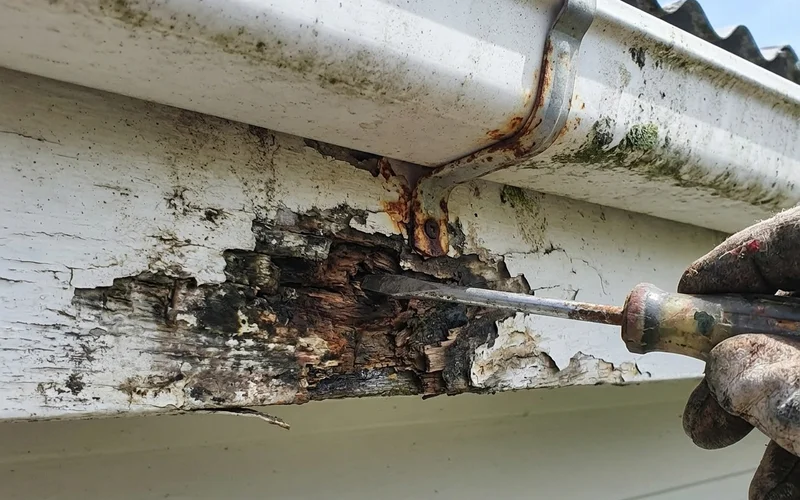
The damage usually happens slowly, in a pattern we see again and again:
- A leaking joint drips onto the same spot every time it rains.
- Overflow spills behind the spouting instead of over the front.
- The timber stays damp for days and the paint lifts.
- Rot sets in, and the brackets lose their grip.
Rotorua’s weather doesn’t help. NIWA’s 1991 to 2020 averages put the city at about 1,356 mm of rain a year, spread over roughly 122 days with at least 1 mm of rain, so damp timber rarely gets a long dry spell.
Blocked gutters can also speed up the rot. The Moisture Detection Company, a New Zealand building diagnostics firm, says the decaying leaves that clog gutters carry aggressive decay fungi, and standard boron treatment can’t stop many of the nastier local species.
Why it matters
Fascia boards hold your spouting up. Once they soften, brackets loosen, spouting sags, and the problem speeds up.
How Does Water Reach the Timber?
Water reaches the timber in four main ways, and most of them start with spouting that has stopped doing its job:
- Overflow behind the spouting. When spouting is blocked, water backs up and can spill over the back edge rather than the front, running straight down the fascia and into the soffit.
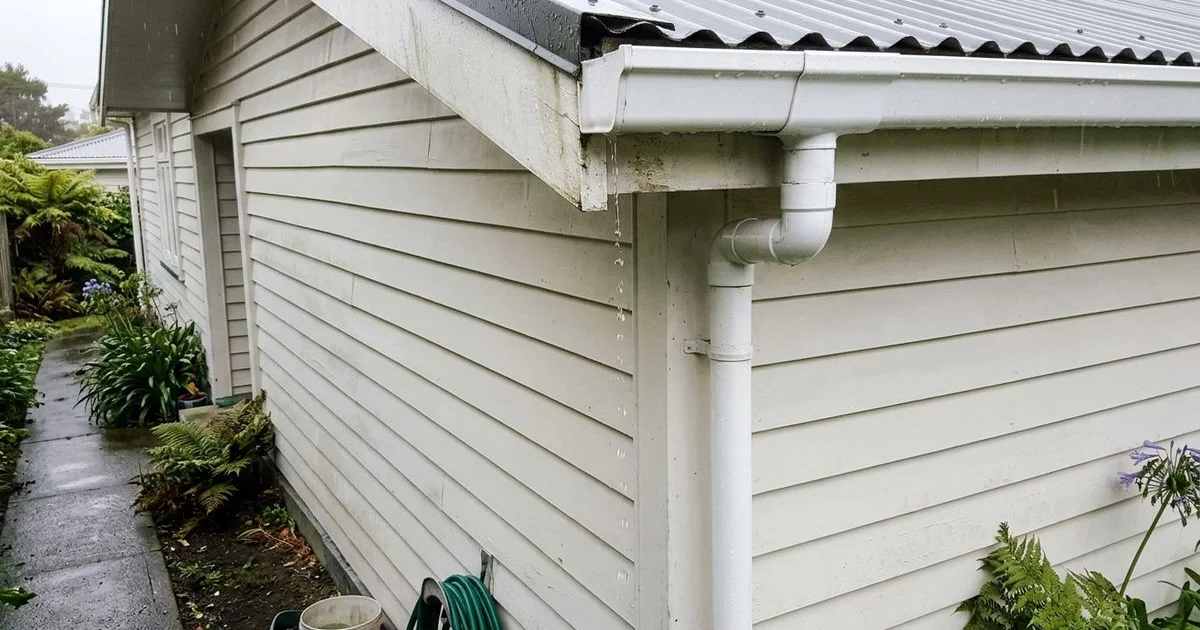
- Leaking joints and outlets. A failed joint drips onto the fascia and soffit below with every shower. Our guide on why gutters leak covers the common leak points.
- Sagging spouting. When a run sags, it can pull away from the fascia and leave a gap. Water runs into that gap instead of along the gutter. NZ manufacturers set a minimum fall of 1:500 (2 mm per metre), and the NZ Metal Roofing Manufacturers Code of Practice recommends 1:200 (5 mm per metre) because it drains and self-cleans better.
- Loose brackets. Bracket screws in damp timber loosen over time, letting the spouting tilt backwards toward the house. Spouting makers such as Ace Spouting say brackets should sit no more than 750 mm apart for gutters under 180 mm wide, and 600 mm apart for gutters 180 to 300 mm wide.
Spouting is meant to overflow to the outside, not into the building. The NZ Building Code’s E2/AS1 acceptable solution says eaves gutters must be designed to do exactly that, so a tilted, sagging or blocked run quietly defeats the design.
Warning Signs to Look For
You can spot most of these from the ground, and heavy rain is the best time to look:
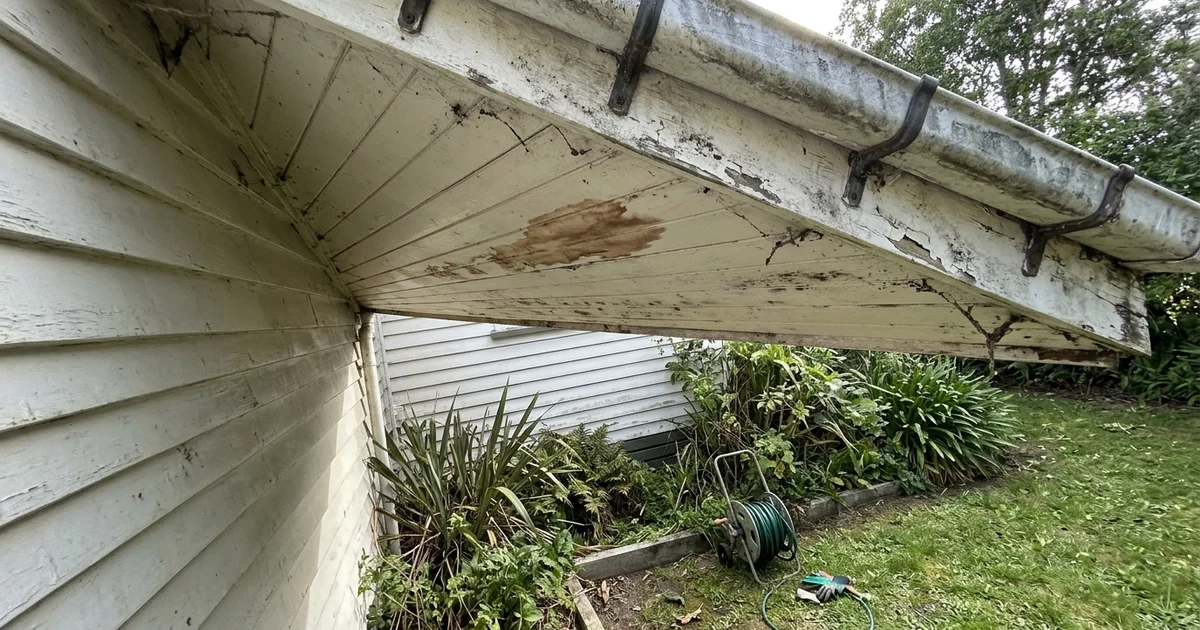
- Staining on the fascia or soffit, often dark streaks or tide marks
- Peeling or blistering paint below the spouting
- Soft or crumbling timber at the ends of boards or around brackets
- Gaps between the spouting and the fascia
- Spouting that tilts back toward the house or sags between brackets
- Mould or moss growing on the soffit lining
| Sign | What it usually means | What to do |
|---|---|---|
| Staining on fascia or soffit | Water escaping regularly at that spot | Clear and check joints above |
| Peeling paint under the spouting | Timber staying damp after rain | Fix the leak, then repaint once dry |
| Soft, spongy timber | Rot has set in | Call a builder; we refit spouting after |
| Spouting tilting backwards | Brackets loosening in damp timber | Re-hang and replace brackets |
| Rot higher up, away from the gutter joints | Possibly a roof leak or roof-space condensation, not just the spouting | Get the roof checked as well |
| Ceiling stain near an outside wall | Water entering the wall or roof space | Act quickly; find and fix the source |
Where the rot sits tells you a lot. Roofing Expert, an Auckland roofing firm, says soffit rot usually comes from gutter overflow, condensation in the roof cavity, or a roof leak tracking along the framing. Rot concentrated around gutter joints points to the spouting, while rot higher up points elsewhere.
On a two-storey house or a multi-level rental, this kind of damage is easy to miss. A quick look from the ground after a downpour is often enough to show tide marks or dripping joints.
Can It Cause Leaks Inside?
It can. Water that gets behind the spouting doesn’t always stay outside. It can run into the roof space or down inside the wall cavity, where you won’t see it until it shows up as a ceiling stain, a damp smell or bubbling paint inside.
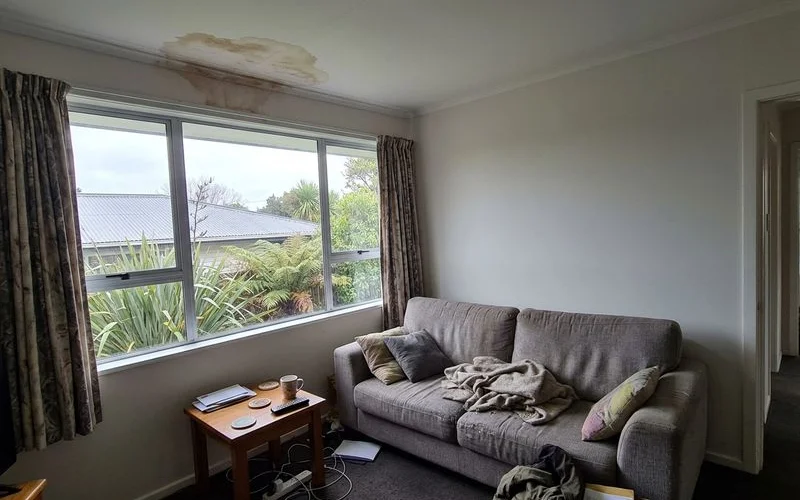
If you see a ceiling stain near an exterior wall, check the spouting above it. It’s often the first clue that water has been escaping for a while.
Hidden gutters carry the highest risk. On Taylor or Klass-style fascia systems, overflow can run across the soffit and into the walls. The Moisture Detection Company reported one house where persistent overflows had rotted large parts of the back wall framing behind the Gib. BRANZ, the building research body, says owners of internal gutters need to know they require regular maintenance.
Repair the Spouting or Call a Builder?
It depends on what’s damaged. If the timber is sound, the spouting is the fix. If it’s soft or rotten, you need a builder first.
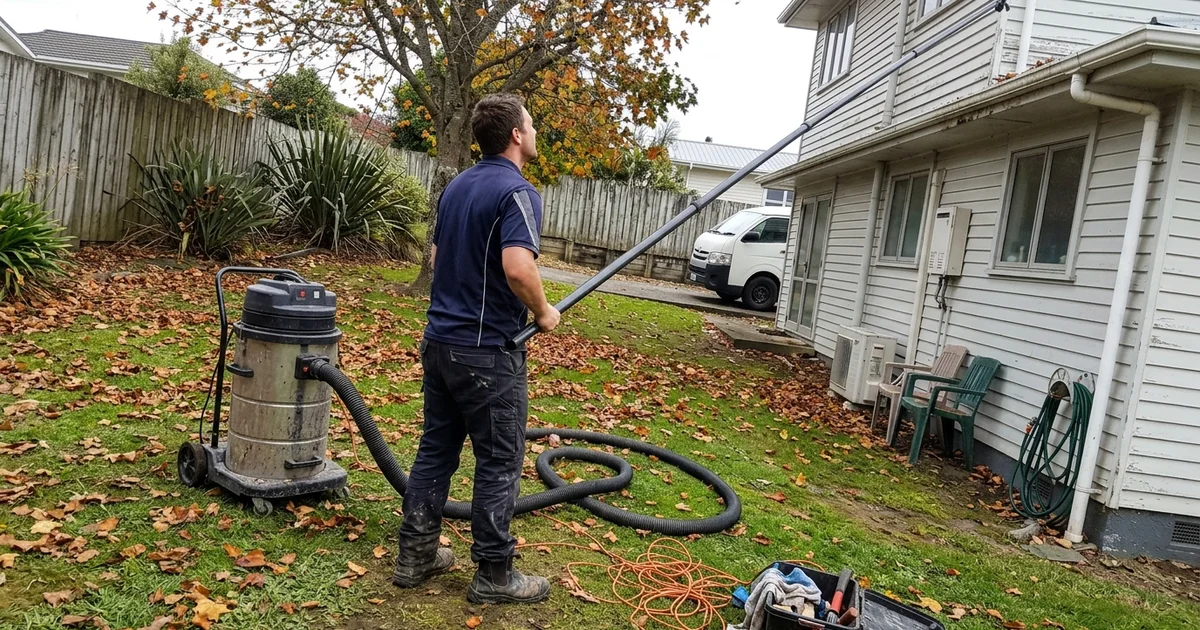
If the timber is sound, the fix is usually the spouting itself. We clear the gutter, reseal leaking joints and outlets, re-hang sagging runs and replace loose brackets. Once the water stays in the spouting, the fascia can dry out and be repainted.
If the timber is soft or rotten, you need a builder to replace the damaged fascia or soffit. We don’t do carpentry, but we can refit or repair the spouting once the new timber is in, and make sure the downpipes drain.
For a rough budget, Roofing Expert lists these installed rates for Auckland. Rotorua prices will differ, so treat them as a ballpark only.
| Job | Who does it | Ballpark (installed, Auckland) |
|---|---|---|
| Reseal joints, re-hang spouting, replace brackets | Us | Free quote after a check |
| Painted pine fascia | Builder | $35 to $55 per linear metre |
| Colorsteel fascia | Builder | $55 to $85 per linear metre |
| Hardiflex soffit sheet | Builder | $45 to $75 per square metre |
Preventing It in the First Place
The best protection against gutter damage to your fascia and soffit is simple: keep the water inside the gutter. Three habits do most of the work:
- Regular gutter cleaning stops blockages that cause water to spill over the back edge.
- Flushing the downpipes keeps the system draining in heavy rain.
- Fixing small leaks early stops them soaking the same patch of timber for years.
Rainfall changes the schedule. Land Use NZ’s summary of NIWA data shows rainfall of about 1,342 mm at Rotorua Airport (1981 to 2010) but up to around 2,400 mm on the Mamaku Plateau. If you’re up that way, or your trees drop a lot of leaves, check the spouting more often.
If you’ve noticed any of the warning signs above, a free quote is a good first step. We’ll check the spouting from the ground, tell you what we see, and let you know whether you need a repair, a clear or a builder. That way you can stop water damage to your soffits before it spreads.