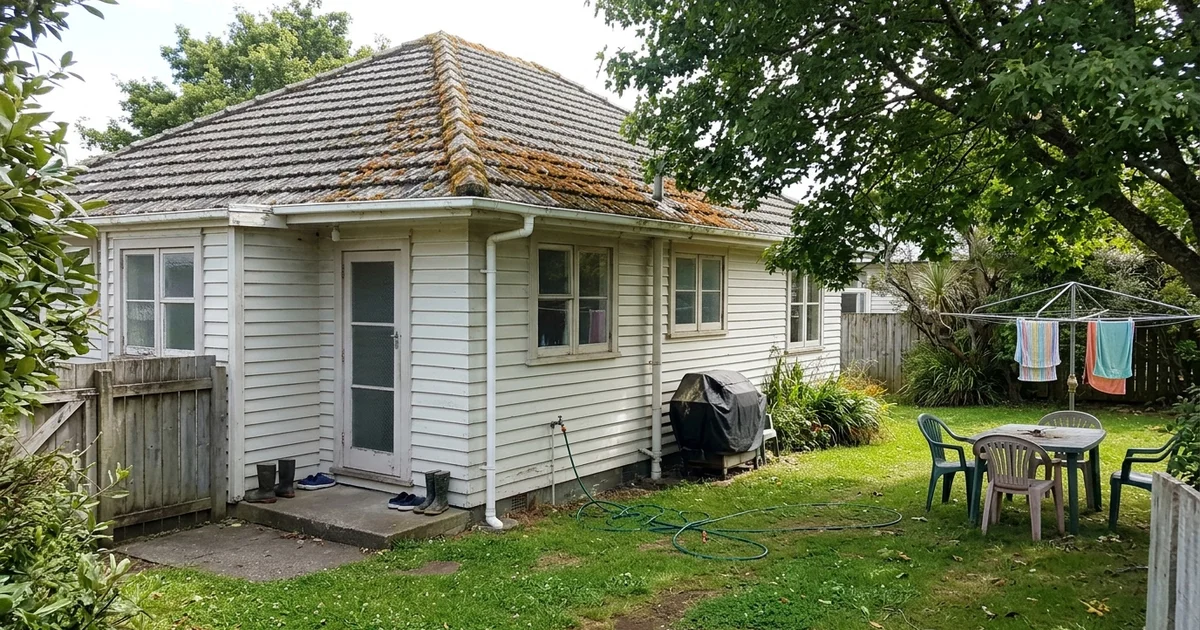
Does Moss Actually Damage a Roof?
Yes, though usually slowly. If you’re asking “is moss damaging my roof?”, the moss itself doesn’t chew through it. The problem is what it does with water.
Moss acts like a sponge, holding moisture against the surface long after the rain stops. Over months and years, that trapped moisture wears down coatings, keeps fixings damp and gives lichen and algae a foothold.
The honest answer to “is it urgent?” depends on how much there is and what your roof is made of. If you’re ready to deal with it, you can treat roof moss with a low-pressure hot-water soft wash that won’t damage the surface. If you’re still deciding, this guide will help.
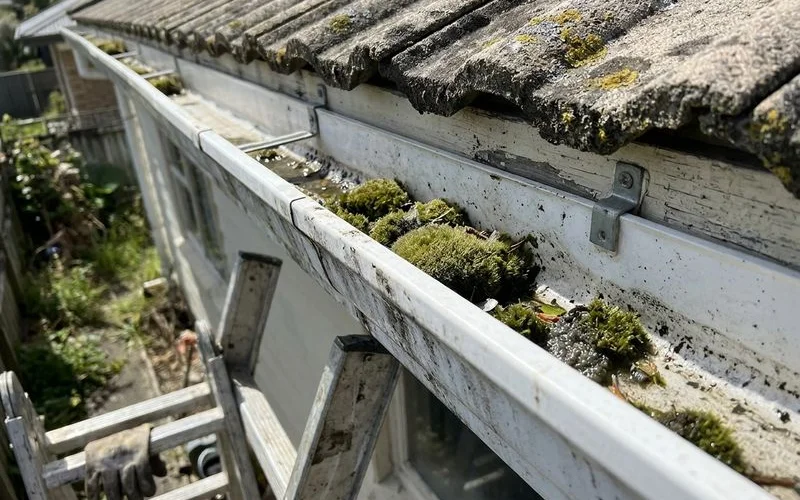
Moss can also hide trouble. Roof Restoration, a New Zealand roofing company, says organic growth can conceal cracked tiles, surface deterioration, blocked drainage or corrosion.
Rotorua gives moss everything it likes. NIWA’s 1991 to 2020 climate averages put the city at about 1,356 mm of rain a year. Add shaded sections under big trees and lake-edge humidity, and roofs facing south or tucked under canopy often grow it first.
The short answer
Moss damages roofs by holding water against them. A little is low urgency. Thick cushions, lichen and moss in the gutters are signs to act.
How Moss Affects Different Roofs
Every common roof type suffers from the same thing: water held where the moss sits. The damage just shows up differently.
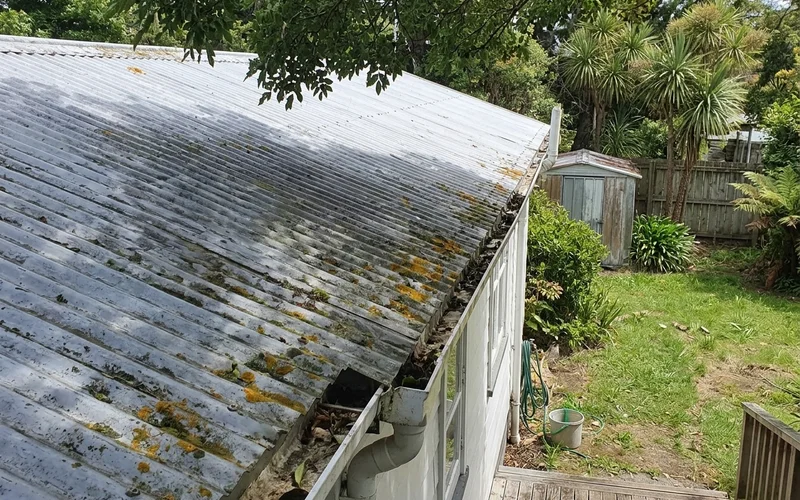
Longrun iron and Colorsteel. Moss sits in the ribs and laps, where water already lingers. Trapped moisture breaks down the paint and coating over time, and once the coating goes, corrosion can follow. Fixings in damp patches also wear faster.
Lichen is the bigger worry on painted steel. Roof Cleaning Ltd says a new Colorsteel roof resists algae and lichen for about four to five years, then growth starts once rain and spores meet. If your roof is past that mark, give it a proper look.
Concrete tiles. Tiles are porous, so moss roots in easily, especially along the laps where tiles overlap. Roofing Expert, an Auckland roofing company, says that porous surface makes concrete tiles especially prone to growth. Moss can lift water up and under the laps in heavy rain, and growth makes the surface hold water for longer.
Decramastic tiles. These have a stone-chip coating. Moss and lichen growing into that coating can loosen chips over time, and harsh cleaning makes chip loss worse.
Older Decramastic needs extra care. Asbestos Safe Consultancy warns that older Decramastic tiles can contain asbestos, and a high-pressure blaster can strip the weathered coating and carry fibres away with the water. If your roof is older, get it tested before anyone cleans it.
| Roof type | How moss affects it | What to watch for |
|---|---|---|
| Longrun iron / Colorsteel | Holds water in ribs and laps, wears coating | Faded or flaking paint, rust spots |
| Concrete tiles | Roots into porous surface and laps | Thick cushions along tile edges |
| Decramastic tiles | Grows into stone-chip coating | Bare patches, chips in the spouting |
Moss in Your Spouting
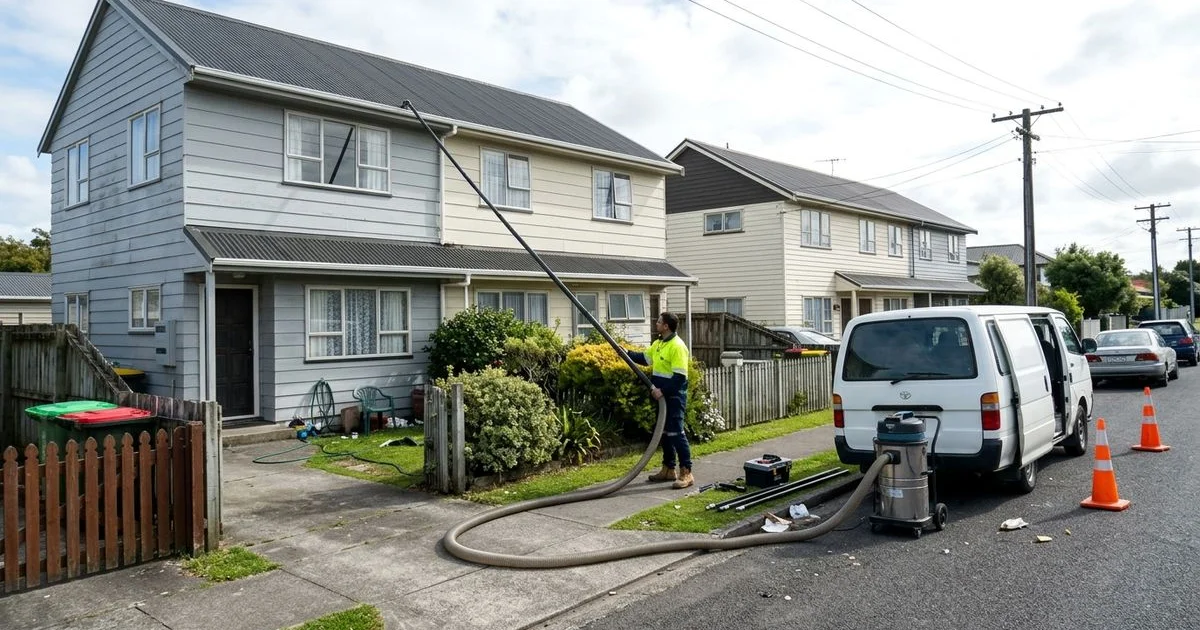
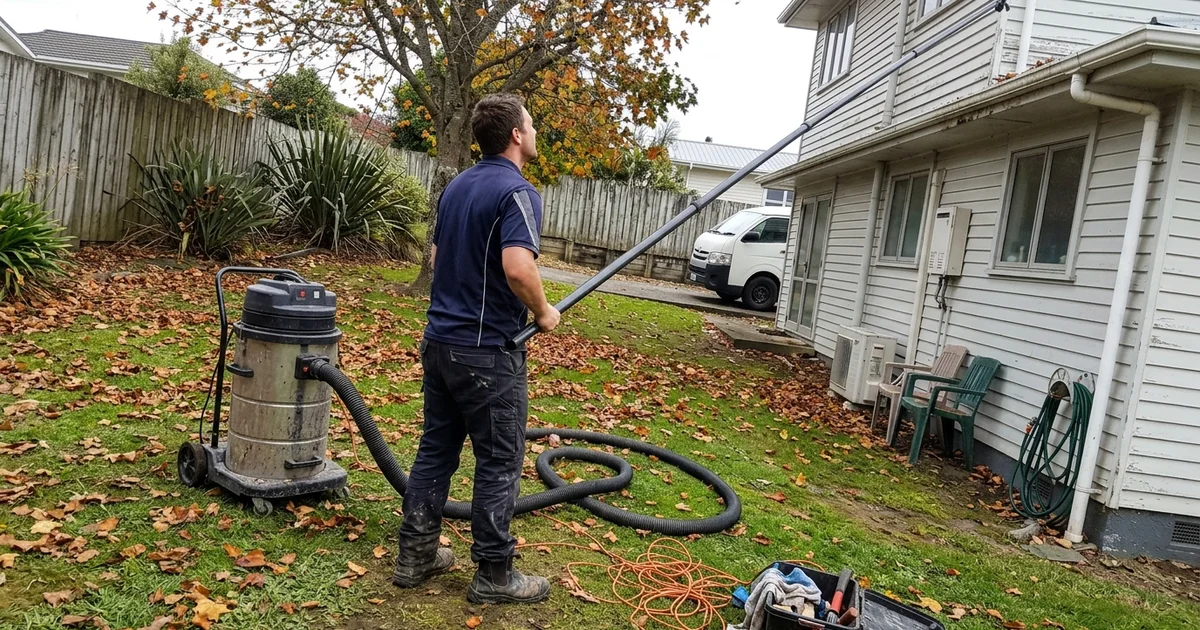
Moss on the roof usually ends up in your gutters. Every heavy shower knocks some moss and grit off the roof, and the clumps are spongy and light. They drift toward the dropper outlets and lodge there.
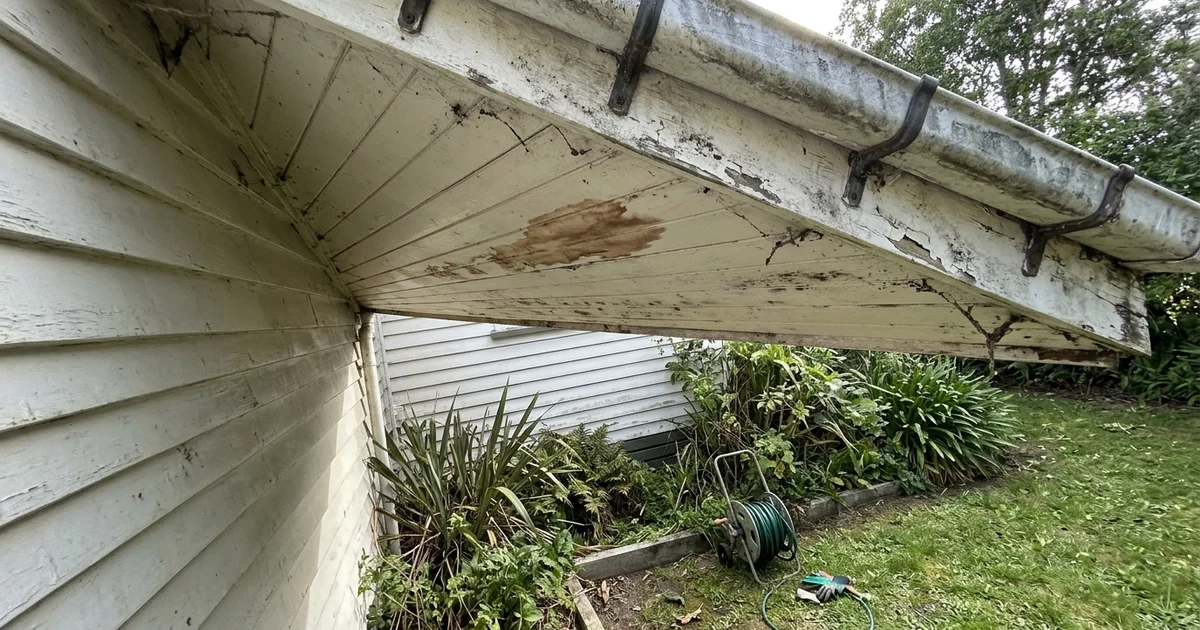
Combined with leaves and silt, they’re a common cause of blocked downpipes. Roof Restoration lists blocked gutters, downpipes and valley outlets among the signs that a mossy roof needs attention.
That’s why moss on the roof often goes hand in hand with overflowing gutters. If you’re seeing both, they’re probably connected.
The usual lodging spots are:
- Dropper outlets
- The tops of downpipes
- Roof valleys that feed into the spouting
A roof treatment followed by gutter clearing and a downpipe flush deals with the whole problem in one go. The order matters if you use a slow-acting spray-on product. Edwards and Hardy says moss and lichen weather away over 10 to 12 months after its RoofGuard treatment, so dead growth keeps washing down for a long while.
Low Urgency vs High Urgency Signs
A thin green film is low urgency. Thick cushions, spreading lichen and blocked spouting are not.
Lower urgency:
- A thin green film or a few small patches
- Growth limited to one shaded face
- Gutters still draining well
Higher urgency:
- Thick moss cushions along tile laps or iron ribs
- Lichen spreading across large areas
- Flaking paint, rust spots or chip loss on the roof
- Moss and grit regularly blocking spouting or downpipes
- Damp patches inside, especially in ceilings near exterior walls
If you’re seeing higher-urgency signs, it’s worth treating sooner rather than later. Roof Restoration also lists damp ceiling marks, roof-space staining and unexpected daylight as signs the problem has gone past the surface.
Own a taller house or manage a multi-level building? Treat roof cleaning as work at height. Roof Restoration notes that WorkSafe counts applying moss products, cleaning roof surfaces and removing roof debris as roof maintenance work, so it needs proper fall protection, not a ladder and a hose.
Treatment vs Replacement
Most mossy roofs don’t need replacing. They need cleaning. A soft wash with clean hot water removes moss, mould and lichen without the damage risk of cold high-pressure blasting.
| Method | What it does | Risk |
|---|---|---|
| Hot-water soft wash | Lifts moss, mould and lichen at low pressure | Low, when done on a roof in sound condition |
| High-pressure blasting | Blasts growth off with force | Strips coatings, cracks tiles, pushes water under laps |
Fizzy Cleaning, an Auckland roof cleaner, adds that blasting can dislodge lead flashings and void many roof warranties. For painted steel, Moss Removal NZ says water blasting colour-coated roofs has the potential to damage the surface.
Early treatment helps your roof last longer. If a roof is already badly corroded or broken, though, cleaning won’t fix that. In that case a roofer should assess repairs or replacement, and we can clear the gutters once the work is done.
Still wondering whether moss is damaging your roof? Ask for a free quote.
We’ll look at the roof from the ground, tell you what we see, and suggest whether a treatment, a gutter clear or both makes sense.